 ChipApex | Global Electronic Components Supplier

SEARCH
Search Product
Search Post
— IC芯片 | 连接器 | 传感器 | 被动器件 —
Search productSearch post
— IC芯片 | 连接器 | 传感器 | 被动器件 —
Consult the customer manager about the wholesale price.
consultation hotline:86-132-6715-2157
email:[email protected]
Contact the product manager for consultation. One-stop consultation is available.
Do you want a lower wholesale price? Please send us your inquiry and we will reply immediately.
The SG-8003CG-SEL is a programmable crystal oscillator manufactured by Epson. It utilizes a Cypress CY5077C die to provide precise frequency outputs ranging from 1 to 166 MHz. The device features a unique oscillator tuning circuit for fine adjustment, allowing programming during the final packaging stage before shipment. Key electrical parameters include a supply voltage of 1.8V, CMOS output type, and frequency stability of ±50 ppm. The component supports enable/disable functionality and operates within a temperature range of -20°C to +70°C.
Verify the specific ordering suffix to confirm the exact programmed frequency and tolerance, as the base model supports a wide range. Confirm the operating temperature grade matches your application requirements, noting that some variants support extended ranges. Ensure the supply voltage aligns with the 1.8V specification. Check for RoHS compliance status if required by your regulatory standards. Validate the package dimensions against your PCB footprint constraints.
Select this component when small size and programmability are critical. The 2.5mm x 2.0mm package suits space-constrained designs. Consider the ±50 ppm stability for general applications. Evaluate the 1.8V supply requirement against system power rails. The enable/disable feature aids in power management strategies. Verify the specific frequency needs against the programmable range up to 166 MHz.
This part belongs to the SG-8003 series of ultra-small programmable oscillators. The series leverages advanced semiconductor integration to replace traditional discrete solutions. It addresses the need for flexibility in production lines where multiple frequency variants are required without maintaining extensive inventory. The technology enables cost-effective customization for manufacturers.
Direct substitutes may include other programmable XO devices from major manufacturers offering similar 4-SMD packages. Verify pin compatibility and voltage levels before substitution. Cross-reference frequency stability and operating temperature ranges to ensure functional equivalence. Consult manufacturer cross-reference guides for approved alternatives.
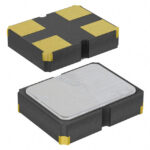 SG-8003CG-SEL

The activity of extra discounts on wholesale prices is in full swing…
Please fill in your contact information and we will send you the latest wholesale price list.





