 ChipApex | Global Electronic Components Supplier

SEARCH
Search Product
Search Post
— IC芯片 | 连接器 | 传感器 | 被动器件 —
Search productSearch post
— IC芯片 | 连接器 | 传感器 | 被动器件 —
Consult the customer manager about the wholesale price.
consultation hotline:86-132-6715-2157
email:[email protected]
Contact the product manager for consultation. One-stop consultation is available.
Do you want a lower wholesale price? Please send us your inquiry and we will reply immediately.
The SG-8018CE-TJHPB is a programmable crystal oscillator from Epson Timing, designed for surface-mount applications. It operates within a supply voltage range of 1.8V to 3.3V and features CMOS output signals. The device supports a frequency range from 670 kHz to 170 MHz with a stability of ±50ppm. Housed in a compact 4-SMD, no-lead package measuring 3.20mm x 2.50mm x 1.20mm, it includes enable/disable functionality. The component functions across an extended temperature range of -40°C to +105°C, ensuring reliable performance in demanding electronic environments.
This specific part number represents a blank, unprogrammed oscillator unit intended for custom frequency configuration. Procurement typically involves ordering through authorized distributors who facilitate the programming process based on customer specifications. Verify that the supplier offers valid programming services and provides appropriate documentation confirming the final programmed frequency and parameters before finalizing acquisition.
Select this component when design requirements demand a flexible frequency solution within the specified operational limits. Ensure the target application supports the 1.8V to 3.3V supply range and utilizes CMOS-compatible input thresholds. Confirm that the system architecture can accommodate the necessary programming procedures or that the chosen distributor provides complete end-product programming services prior to delivery.
The SG-8018CE-TJHPB belongs to the SG-8018 series of programmable crystal oscillators manufactured by Epson Timing. This series is engineered to provide high-frequency stability in miniature surface-mount packages. The TJHPB suffix indicates a programmable variant, distinguishing it from fixed-frequency models within the same family, offering designers greater flexibility in clock signal generation.
Direct replacements must match the 3.2x2.5mm package, 1.8-3.3V operation, and programmable nature. Consider other Epson SG-8018CE variants with identical pinouts and electrical characteristics. Verify that alternative sources support the same programming workflow and deliver comparable frequency stability and temperature performance metrics.
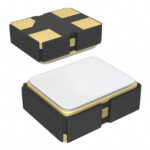 SG-8018CE-TJHPB

The activity of extra discounts on wholesale prices is in full swing…
Please fill in your contact information and we will send you the latest wholesale price list.





