ChipApex | Global Electronic Components Supplier

SEARCH
Search Product
Search Post
— IC芯片 | 连接器 | 传感器 | 被动器件 —
Search productSearch post
— IC芯片 | 连接器 | 传感器 | 被动器件 —
Consult the customer manager about the wholesale price.
consultation hotline:86-132-6715-2157
email:[email protected]
Contact the product manager for consultation. One-stop consultation is available.
Do you want a lower wholesale price? Please send us your inquiry and we will reply immediately.
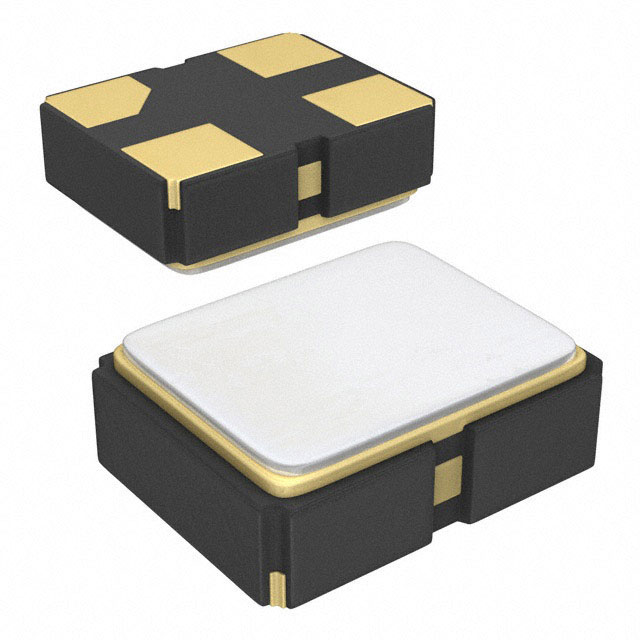
The SG-8101CB-TBGSC is a programmable crystal oscillator (XO) from the EPSON SG-8101 series, featuring CMOS output and a crystal base resonator. It operates within a frequency range of 670 kHz to 20 MHz with a total frequency stability of ±15ppm. The device supports a supply voltage of 1.62V to 3.63V and includes a standby function. Maximum supply current is 6.8mA, while disabled current is 1.1µA. It functions in temperatures from -40°C to 85°C and is housed in a 4-SMD, no-lead package measuring 2.50mm x 2.00mm.
This component requires specific frequency programming by the distributor or manufacturer prior to shipment. Buyers must provide the desired operating frequency in order remarks or through designated programming channels. Verify that the requested frequency falls within the 670 kHz to 20 MHz operational range. Confirm package dimensions and voltage requirements match the target design specifications before finalizing orders.
Select this model when a compact, low-power programmable oscillator is required for designs operating between 1.62V and 3.63V. The ±15ppm stability suits applications needing moderate precision without complex calibration. Ensure the system accommodates the 4-SMD footprint and utilizes CMOS-compatible input thresholds. Consider the standby feature if power management is critical for battery-operated devices.
Part of the SG-8101 series of programmable crystal oscillators designed for space-constrained electronics. The series offers flexibility in frequency selection while maintaining consistent performance across temperature variations. This specific variant uses a crystal resonator for baseline stability and provides a standardized surface-mount form factor suitable for automated assembly processes.
Direct substitutes may include other SG-8101 variants with different suffixes indicating pre-programmed frequencies or alternative packages. Verify pin compatibility and electrical parameters such as supply voltage and output type when cross-referencing. Consult official datasheets for dimensional tolerances and thermal characteristics to ensure mechanical fit.
 SG-8101CB-TBGSC

The activity of extra discounts on wholesale prices is in full swing…
Please fill in your contact information and we will send you the latest wholesale price list.