ChipApex | Global Electronic Components Supplier

SEARCH
Search Product
Search Post
— IC芯片 | 连接器 | 传感器 | 被动器件 —
Search productSearch post
— IC芯片 | 连接器 | 传感器 | 被动器件 —
Consult the customer manager about the wholesale price.
consultation hotline:86-132-6715-2157
email:[email protected]
Contact the product manager for consultation. One-stop consultation is available.
Do you want a lower wholesale price? Please send us your inquiry and we will reply immediately.
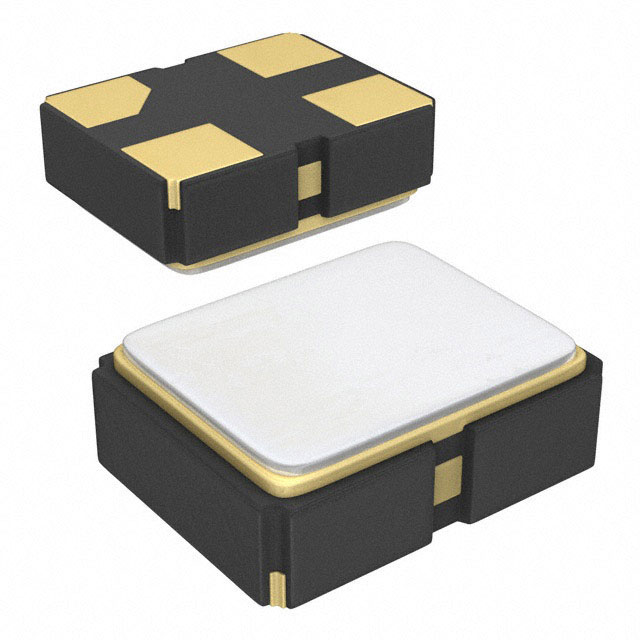
The SG-8101CB-TCHPC is a programmable crystal oscillator manufactured by EPSON. It operates within a frequency range of 670 kHz to 20 MHz and supports CMOS output waveforms. The device functions with a supply voltage between 1.62 V and 3.63 V. It features an enable/disable control function for power management. The component is housed in a 4-SMD, No Lead package with dimensions of 2.50 x 2.00 x 0.80 mm. It is designed for operation across a temperature range of -40°C to +105°C.
Verify the specific frequency configuration required for your application, as this model represents a programmable variant where the exact output frequency is determined by the ordering suffix or programming instructions. Confirm that the 1.62 V to 3.63 V supply voltage range aligns with your system's power rails. Ensure the 4-SMD no-lead package footprint matches your PCB layout constraints. Check if the enable/disable pin configuration meets your power management scheme requirements before finalizing procurement.
Select this component when a precise, programmable clock source is needed below 20 MHz. It is suitable for applications requiring CMOS outputs and wide operating temperature ranges. Consider the enable/disable feature if dynamic power saving is necessary. Compare against fixed-frequency oscillators if programming flexibility is not required. Ensure the small form factor fits within the available board space.
The SG-8101CB series belongs to EPSON's lineup of programmable crystal oscillators. This family offers flexibility in frequency selection compared to standard fixed-frequency crystals. The CB variant typically denotes specific package and performance characteristics within the broader SG-8101 product line. These components are designed to replace multiple discrete crystal and oscillator combinations with a single integrated solution.
Direct replacements must match the 4-SMD no-lead package and 1.62-3.63V supply range. Verify compatibility with the target frequency range of 670 kHz to 20 MHz. Ensure the replacement part also supports CMOS outputs and the -40 to +105°C operating temperature. Check if the new part includes enable/disable functionality if required by the design.
 SG-8101CB-TCHPC

The activity of extra discounts on wholesale prices is in full swing…
Please fill in your contact information and we will send you the latest wholesale price list.