 ChipApex | Global Electronic Components Supplier

SEARCH
Search Product
Search Post
— IC芯片 | 连接器 | 传感器 | 被动器件 —
Search productSearch post
— IC芯片 | 连接器 | 传感器 | 被动器件 —
Consult the customer manager about the wholesale price.
consultation hotline:86-132-6715-2157
email:[email protected]
Contact the product manager for consultation. One-stop consultation is available.
Do you want a lower wholesale price? Please send us your inquiry and we will reply immediately.
The SG-9101CA-C02PHDAA is a programmable spread spectrum crystal oscillator from Epson. It operates within a frequency range of 670 kHz to 170 MHz and supports CMOS output levels. The device functions with a supply voltage between 1.62V and 3.63V. It features an enable/disable control function for power management. The component is housed in a compact 4-SMD, no-lead package measuring 2.50mm x 2.00mm x 0.80mm. It is designed for surface mount installation and supports center-spread modulation.
Verify the specific ordering suffix to confirm the programmed frequency and package variant matches the design requirements. Ensure the input voltage aligns with the 1.62V to 3.63V operational range. Confirm that the 4-SMD no-lead footprint dimensions are compatible with the PCB layout. Check for any required programming instructions if the component is ordered as a blank unit. Validate compliance with relevant environmental standards such as RoHS before finalizing procurement.
Select this component when a precise, programmable clock source is needed with spread spectrum capabilities. Consider the CMOS output compatibility with downstream logic circuits. Evaluate the thermal performance against the -40°C to 85°C operating range. Assess the size constraints against the 2.50mm x 2.00mm package dimensions. Compare power requirements against the supply voltage specifications to ensure stable operation under varying load conditions.
This model belongs to the SG-9101 series of programmable spread spectrum crystal oscillators. The series offers flexibility in frequency selection compared to fixed-frequency alternatives. It utilizes a quartz crystal resonator as the base timing element. The family is characterized by small form factors and low power consumption. Other variants in the series may differ in package size or voltage ranges.
Direct substitutes include other models within the SG-9101 series, such as SG-9101CG-C07PGCAA, provided they match the required frequency and package type. Verify pinout compatibility and electrical characteristics before substitution. Cross-reference with manufacturer documentation to ensure equivalent performance metrics.
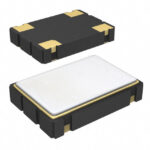 SG-9101CA-C02PHDAA

The activity of extra discounts on wholesale prices is in full swing…
Please fill in your contact information and we will send you the latest wholesale price list.





