 ChipApex | Global Electronic Components Supplier
SEARCH
Search Product
Search Post
— IC芯片 | 连接器 | 传感器 | 被动器件 —
Search productSearch post
— IC芯片 | 连接器 | 传感器 | 被动器件 —
Consult the customer manager about the wholesale price.
consultation hotline:86-132-6715-2157
email:[email protected]
Contact the product manager for consultation. One-stop consultation is available.
Do you want a lower wholesale price? Please send us your inquiry and we will reply immediately.
The SG-9101CG-D40PGACA is a programmable spread spectrum crystal oscillator manufactured by EPSON. It features a CMOS output and operates within a supply voltage range of 1.62V to 3.63V. The device supports a frequency range from 670 kHz to 170 MHz and includes enable/disable functionality. It utilizes a 4-SMD, no lead package with dimensions of 2.50mm x 2.00mm x 0.80mm. The component is designed for surface mount installation and functions reliably across an operating temperature range of -40°C to 105°C.
Verify the specific frequency configuration required for your application before ordering, as this model is a programmable device. Ensure that the programming tool or service provider supports the SG-9101 series specifications. Confirm that the 4-SMD package dimensions align with your PCB footprint design. Check compatibility with the target system's voltage levels and temperature operating ranges.
Choose this oscillator when a compact, low-power solution with programmable frequency flexibility is needed. Consider the 1.62V to 3.63V supply range to ensure compatibility with the host system's power rails. Evaluate the need for spread spectrum capabilities to reduce electromagnetic interference in sensitive designs. Verify that the -40°C to 105°C temperature range meets the environmental conditions of the intended deployment.
This component belongs to the SG-9101CG series of programmable spread spectrum crystal oscillators. The series is characterized by its small form factor and wide frequency tunability. It serves as a critical timing element in modern electronics where space constraints and power efficiency are paramount. The SG-9101CG models offer a versatile alternative to fixed-frequency oscillators in dynamic system designs.
Direct replacements must match the 4-SMD package and CMOS output type. Verify that any substitute supports the same 1.62V to 3.63V supply range and programmable frequency capabilities. Ensure the replacement part offers comparable spread spectrum performance and temperature stability.
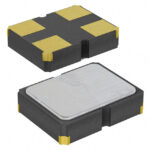 SG-9101CG-D40PGACA
The activity of extra discounts on wholesale prices is in full swing…
Please fill in your contact information and we will send you the latest wholesale price list.





