 ChipApex | Global Electronic Components Supplier
SEARCH
Search Product
Search Post
— IC芯片 | 连接器 | 传感器 | 被动器件 —
Search productSearch post
— IC芯片 | 连接器 | 传感器 | 被动器件 —
Consult the customer manager about the wholesale price.
consultation hotline:86-132-6715-2157
email:[email protected]
Contact the product manager for consultation. One-stop consultation is available.
Do you want a lower wholesale price? Please send us your inquiry and we will reply immediately.
The EPSON SG-9101CG-D40PHDCB is a programmable spread spectrum crystal oscillator (XO) with CMOS output. It operates within a frequency range of 670 kHz to 170 MHz and supports a supply voltage of 1.62V to 3.63V. The device features enable/disable functionality and is housed in a compact 4-SMD, no-lead package measuring 2.50mm x 2.00mm x 0.80mm. It is designed for surface mount installation and functions reliably across an operating temperature range of -40°C to 105°C.
Verify the specific frequency programming requirements before ordering, as this component requires custom configuration. Confirm that the 4-SMD package dimensions align with the target PCB footprint. Ensure the design accommodates the 1.62V to 3.63V supply voltage range and thermal conditions between -40°C and 105°C. Check RoHS3 compliance status if environmental regulations apply to the final product assembly.
Select this model when a small form factor programmable oscillator is required for space-constrained designs. Consider the CMOS output compatibility with downstream logic circuits. Evaluate the need for spread spectrum functionality to reduce electromagnetic interference in sensitive applications. Compare against other series members if different frequency ranges or package sizes are necessary for the specific system architecture.
This component belongs to the SG-9101Cx series of programmable spread spectrum crystal oscillators manufactured by Epson. The series offers various frequency options and packaging configurations to suit diverse electronic design needs. The SG-9101CG-D40PHDCB variant specifically provides a balance of high frequency range and compact size, making it suitable for modern portable and industrial electronics.
Direct substitutes include other SG-9101CG variants with compatible pinouts and electrical characteristics. Verify that any replacement part matches the 4-SMD no-lead package dimensions and operates within the same voltage and temperature specifications. Cross-reference datasheets to ensure identical spread spectrum capabilities and CMOS output levels.
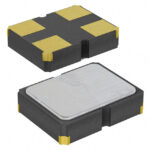 SG-9101CG-D40PHDCB
The activity of extra discounts on wholesale prices is in full swing…
Please fill in your contact information and we will send you the latest wholesale price list.





