 ChipApex | Global Electronic Components Supplier
SEARCH
Search Product
Search Post
— IC芯片 | 连接器 | 传感器 | 被动器件 —
Search productSearch post
— IC芯片 | 连接器 | 传感器 | 被动器件 —
Consult the customer manager about the wholesale price.
consultation hotline:86-132-6715-2157
email:[email protected]
Contact the product manager for consultation. One-stop consultation is available.
Do you want a lower wholesale price? Please send us your inquiry and we will reply immediately.
The SG-9101CG-D40SHACA is a programmable spread spectrum crystal oscillator manufactured by EPSON. It features a CMOS output and operates within a supply voltage range of 1.62V to 3.63V. The device supports a frequency range from 670 kHz to 170 MHz and includes a standby function for power management. It utilizes a 4-SMD, no lead package with dimensions of 2.50mm x 2.00mm x 0.80mm. The unit offers an extended operating temperature range of -40°C to +105°C and provides a downward spread bandwidth of -4.00%.
Verify the specific target frequency requirement during the ordering process, as this model is programmed to order. Confirm that the application environment remains within the specified -40°C to +105°C operational limits. Ensure the design accommodates the 1.62V to 3.63V supply voltage range and the 4-SMD surface mount footprint. Check for RoHS compliance documentation if required by project specifications.
Select this component when a compact, programmable clock source with spread spectrum capabilities is needed. It is suitable for designs requiring flexibility in frequency selection without maintaining multiple inventory SKUs. Consider the extended temperature range for applications exposed to significant thermal variations. Evaluate the standby current consumption against overall system power budgets.
This part belongs to the SG-9101CG series of programmable spread spectrum crystal oscillators. The series is designed to provide flexible clock solutions for various electronic applications. The SG-9101CG-D40SHACA specifically denotes the variant with the D40 spread spectrum profile and SHACA suffix indicating the specific package and temperature grade configuration within the Epson portfolio.
Direct substitutes are not explicitly confirmed in public documentation. Similar functionality may be found within the broader SG-9101CG family or other Epson programmable oscillator lines, but pinout and electrical characteristics must be verified. Cross-referencing with generic industry alternatives requires careful validation of frequency stability and package dimensions.
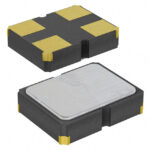 SG-9101CG-D40SHACA
The activity of extra discounts on wholesale prices is in full swing…
Please fill in your contact information and we will send you the latest wholesale price list.





