 ChipApex | Global Electronic Components Supplier
SEARCH
Search Product
Search Post
— IC芯片 | 连接器 | 传感器 | 被动器件 —
Search productSearch post
— IC芯片 | 连接器 | 传感器 | 被动器件 —
Consult the customer manager about the wholesale price.
consultation hotline:86-132-6715-2157
email:[email protected]
Contact the product manager for consultation. One-stop consultation is available.
Do you want a lower wholesale price? Please send us your inquiry and we will reply immediately.
The SGR-8002DC-PTC is a programmable crystal oscillator from the SG-8002 series manufactured by Epson. It operates on a 5V supply with a maximum current consumption of 45mA and features TTL output. The device supports frequencies ranging from 1 MHz to 125 MHz with a frequency stability of ±100ppm. It includes an enable/disable function and is housed in an 8-DIP, 4-lead half-size package designed for through-hole mounting. The operating temperature range spans from -20°C to 70°C.
This component is officially listed as obsolete or discontinued by the manufacturer. Procurement requires verification of availability through third-party distributors who may offer programmed units. Buyers must confirm the specific programming service terms, such as frequency input methods and lead times, directly with the supplier. Due to the end-of-life status, long-term supply continuity cannot be guaranteed without explicit vendor confirmation.
Select this part only if through-hole 8-DIP packaging is strictly required for the design. The programmable nature necessitates coordination with the distributor for frequency specification during ordering. Ensure the system voltage aligns with the 5V requirement and that the TTL output levels are compatible with the receiving logic. Verify that the ±100ppm stability meets the application's timing accuracy needs.
The SGR-8002DC-PTC belongs to the SG-8002 series of programmable crystal oscillators. This series utilizes PLL technology to provide wide frequency outputs. The DC suffix typically indicates a specific package variant, while PTC denotes the programming configuration. These oscillators are designed to replace fixed-frequency crystals where flexible timing solutions are needed.
As the SGR-8002DC-PTC is discontinued, direct substitutes are not explicitly confirmed in public documentation. Designers should evaluate other SG-8002 variants or alternative programmable oscillators from different manufacturers that offer similar DIP packages and TTL outputs. Cross-referencing pinouts and electrical specifications is essential for any replacement strategy.
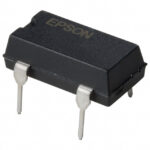 SGR-8002DC-PTC
The activity of extra discounts on wholesale prices is in full swing…
Please fill in your contact information and we will send you the latest wholesale price list.





