 ChipApex | Global Electronic Components Supplier
SEARCH
Search Product
Search Post
— IC芯片 | 连接器 | 传感器 | 被动器件 —
Search productSearch post
— IC芯片 | 连接器 | 传感器 | 被动器件 —
Consult the customer manager about the wholesale price.
consultation hotline:86-132-6715-2157
email:[email protected]
Contact the product manager for consultation. One-stop consultation is available.
Do you want a lower wholesale price? Please send us your inquiry and we will reply immediately.
The SGR-8002DC-STM is a programmable crystal oscillator (XO) manufactured by Epson. It features TTL output levels and operates on a single 5V supply voltage. The device supports frequency programming within the range of 1 MHz to 55 MHz, with a specified frequency stability of ±100 ppm. It is housed in an 8-DIP package with four leads, representing a half-size configuration suitable for through-hole mounting. The component includes a standby function to manage power consumption during inactive periods.
Verify the specific ordered frequency against project requirements before purchase, as this model requires custom programming. Confirm that the TTL output voltage levels align with the receiving logic family inputs. Ensure the 5V supply rail is stable and within the specified operating range to maintain the stated ±100 ppm frequency stability. Check package orientation markings for correct PCB placement.
Select this component when a fixed-frequency oscillator is insufficient and precise, user-defined frequencies between 1 MHz and 55 MHz are required. Choose the STM suffix variant specifically for its 100 ppm stability specification and TTL output compatibility. Consider the half-size DIP package constraints if space limitations exist but through-hole assembly remains necessary. Evaluate power budget implications regarding the active and standby current specifications relative to system uptime.
This part belongs to the SG-8002 series of programmable oscillators from Epson. The series offers various output types and stability grades. The SGR-8002DC-STM specifically denotes the TTL output version with 100 ppm stability. It complements other variants like SHB or STC which may offer different stability metrics or output standards such as LVCMOS.
Direct substitutes include other SGR-8002DC variants with matching TTL outputs and similar frequency ranges, such as SGR-8002DC-SHB or SGR-8002DC-STC, provided their respective stability specifications meet the design requirements. Verify pinout compatibility and electrical characteristics before substitution.
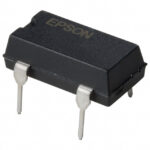 SGR-8002DC-STM
The activity of extra discounts on wholesale prices is in full swing…
Please fill in your contact information and we will send you the latest wholesale price list.




