 ChipApex | Global Electronic Components Supplier
SEARCH
Search Product
Search Post
— IC芯片 | 连接器 | 传感器 | 被动器件 —
Search productSearch post
— IC芯片 | 连接器 | 传感器 | 被动器件 —
Consult the customer manager about the wholesale price.
consultation hotline:86-132-6715-2157
email:[email protected]
Contact the product manager for consultation. One-stop consultation is available.
Do you want a lower wholesale price? Please send us your inquiry and we will reply immediately.
The SGW23N60UFDTM is an N-channel Insulated Gate Bipolar Transistor (IGBT) from Fairchild Semiconductor's UF series, housed in a TO-252 (DPAK) surface-mount package. It features a collector-emitter breakdown voltage of 600 V and a continuous collector current rating of 23 A at case temperature. The device is engineered for high-speed switching applications with low conduction losses, offering a saturation voltage of 2.1 V at 12 A. Key electrical parameters include a maximum gate-emitter voltage of ±20 V, a fall time of 60 ns, and a power dissipation capacity of 75 W.
Verify the specific suffix DTU or DTM against the manufacturer datasheet to confirm pinout compatibility and thermal characteristics. Confirm RoHS compliance status as historical Fairchild data may vary by production batch. Ensure the ordering part number matches the exact package style required for the PCB footprint. Check for obsolescence notices from ON Semiconductor, the successor to Fairchild Semiconductor.
Select this component for designs requiring a balance between high current handling and fast switching speeds in a compact surface-mount form factor. Compare the 2.1 V saturation voltage at 12 A against alternative IGBTs to ensure efficiency targets are met. Verify that the TO-252 package thermal resistance supports the expected power dissipation under worst-case operating conditions.
This device belongs to the Fairchild UF series of Insulated Gate Bipolar Transistors. The series is characterized by optimized performance for applications demanding both low conduction loss and high-speed switching. Similar parts in the lineup include the SGP and SGH series, which offer varying current ratings and package options while maintaining the same core ultra-fast technology.
Direct substitutes within the same family include the SGW23N60UF and SGW23N60UFD. When replacing, verify that the alternative package type matches the existing board layout. Ensure the replacement maintains the 600 V rating and comparable switching times to preserve circuit timing.
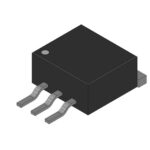 SGW23N60UFDTM
The activity of extra discounts on wholesale prices is in full swing…
Please fill in your contact information and we will send you the latest wholesale price list.





