ChipApex | Global Electronic Components Supplier
SEARCH
Search Product
Search Post
— IC芯片 | 连接器 | 传感器 | 被动器件 —
Search productSearch post
— IC芯片 | 连接器 | 传感器 | 被动器件 —
Consult the customer manager about the wholesale price.
consultation hotline:86-132-6715-2157
email:[email protected]
Contact the product manager for consultation. One-stop consultation is available.
Do you want a lower wholesale price? Please send us your inquiry and we will reply immediately.
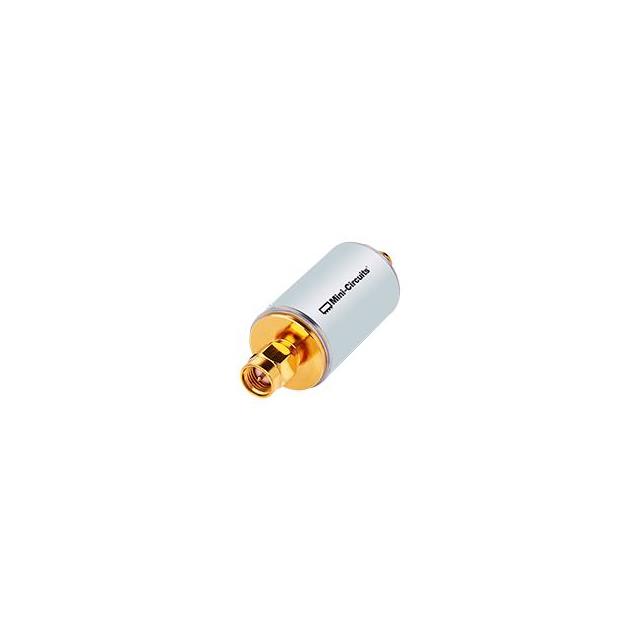
The SHP-800+ is a lumped LC high-pass filter manufactured by Mini-Circuits, designed for RF signal conditioning applications. It operates within a frequency range of 780 MHz to 3000 MHz and features a nominal cutoff frequency (fco) of 1.89 GHz with a bandwidth of 2.22 GHz. The component maintains a system impedance of 50 Ohms and utilizes SMA connectors for inline termination. Housed in the FF99 case style with an ENV28 environmental rating, this filter provides effective stopband rejection below the passband while ensuring minimal insertion loss in the operating range.
Verify the specific datasheet revision and electrical test conditions prior to procurement. Confirm that the SMA connector polarity and case style match your assembly requirements. Ensure environmental ratings meet operational standards. Cross-reference part numbers carefully as suffixes may indicate variations in packaging or testing protocols not explicitly detailed in general summaries.
Select this component when a high-pass characteristic is required between 780 MHz and 3 GHz. The 50 Ohm impedance matches standard RF transmission lines. Consider the physical dimensions of the FF99 package for PCB layout constraints. Evaluate insertion loss and stopband attenuation specifications against system noise floor and interference requirements to ensure adequate signal integrity.
This component belongs to Mini-Circuits' SHP series of lumped LC high-pass filters. It shares design principles with related models such as the BHP-800+, which offers similar frequency performance but utilizes BNC connectors instead of SMA. The series is engineered for reliable performance in commercial and industrial RF environments, providing consistent filtering characteristics across the specified bandwidth.
The BHP-800+ serves as a functional substitute with identical electrical specifications but differs in connector type, using BNC instead of SMA. Verify mechanical compatibility and connector availability before substitution. No other direct equivalents are confirmed in public documentation.
 SHP-800+
The activity of extra discounts on wholesale prices is in full swing…
Please fill in your contact information and we will send you the latest wholesale price list.