 ChipApex | Global Electronic Components Supplier
SEARCH
Search Product
Search Post
— IC芯片 | 连接器 | 传感器 | 被动器件 —
Search productSearch post
— IC芯片 | 连接器 | 传感器 | 被动器件 —
Consult the customer manager about the wholesale price.
consultation hotline:86-132-6715-2157
email:[email protected]
Contact the product manager for consultation. One-stop consultation is available.
Do you want a lower wholesale price? Please send us your inquiry and we will reply immediately.
The SI2493-D-GTR is a system-side ISOmodem device from Skyworks Solutions, packaged in a 24-pin TSSOP. It operates with a digital supply voltage (VD) ranging from 3.0 V to 3.6 V and supports an operating temperature range of -40 °C to +85 °C for the G-grade variant. The component provides data rates up to 56 kbps downstream and 48 kbps upstream over PSTN lines. It features integrated Direct Access Arrangement (DAA) technology, eliminating the need for external transformers or opto-isolators. Communication interfaces include UART, SPI, and parallel modes.
Verify that the specific ordering suffix matches the required package type and temperature grade. Confirm compatibility with the Si3018 line-side device as the datasheet validity depends on listed chipset combinations. Ensure environmental compliance requirements such as RoHS are met for the intended deployment region.
Select the 24-pin TSSOP version when parallel interface, EEPROM access, or voice codec connectivity is required. The 16-pin SOIC option is suitable for footprint-compatible designs where these specific interfaces are unnecessary. Verify clock source configuration against application timing constraints before finalizing the bill of materials.
This component belongs to the ISOmodem family designed for embedded modem applications. It functions as the system-side processor within a two-device chipset architecture alongside the Si3018 line-side device. The design emphasizes minimal external component count and small physical footprint for integration into compact electronic devices.
Publicly confirmed substitute part numbers are not available in the provided documentation. Design changes should be validated against the typical application schematic and layout guidelines specified in Application Note AN93.
Yes, the 24-pin TSSOP version supports UART, SPI, and parallel host interfaces, whereas the 16-pin version does not support the parallel interface.
The device supports conventional data formats with connect rates of up to 56,000 bps (56 kbps) downstream over the Public Switched Telephone Network.
The device supports flexible clock options, including a low-cost 32.768 kHz oscillator, a 4.915 MHz oscillator, or a 27 MHz clock input, allowing for various implementation choices.
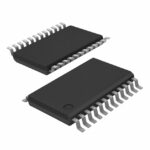 SI2493-D-GTR
The activity of extra discounts on wholesale prices is in full swing…
Please fill in your contact information and we will send you the latest wholesale price list.





