ChipApex | Global Electronic Components Supplier
SEARCH
Search Product
Search Post
— IC芯片 | 连接器 | 传感器 | 被动器件 —
Search productSearch post
— IC芯片 | 连接器 | 传感器 | 被动器件 —
Consult the customer manager about the wholesale price.
consultation hotline:86-132-6715-2157
email:[email protected]
Contact the product manager for consultation. One-stop consultation is available.
Do you want a lower wholesale price? Please send us your inquiry and we will reply immediately.
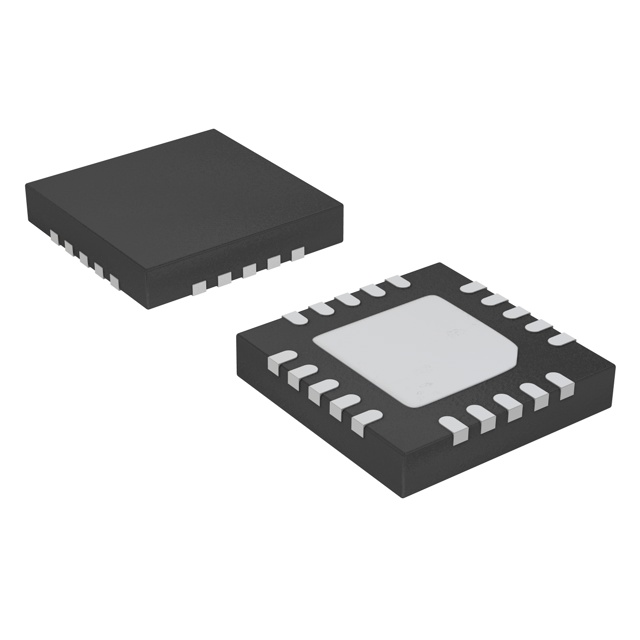
The Si5010-B-GMR is a fully integrated clock and data recovery (CDR) IC designed for OC-12/3 and STM-4/1 SONET/SDH applications. It operates from a single 2.5 V supply with typical power dissipation of 293 mW at OC-12 rates. The device utilizes DSPLL technology to eliminate external loop filter components, ensuring low jitter generation of 1.6 mUI rms. It features differential CML inputs and outputs, LVTTL control interfaces, and supports multi-rate operation via the RATESEL pin. Packaged in a 20-lead 4x4 mm QFN, it functions within an industrial temperature range of –40 to 85 °C.
Verify the ordering suffix 'GMR' indicates tape and reel packaging with 2500 units per reel. Confirm the 'B' revision code matches the required die version. Ensure the component is sourced from authorized distributors to guarantee RoHS compliance and lead finish integrity. Check for end-of-life notifications as older revisions may be discontinued.
Select this device for high-speed serial links requiring strict SONET/SDH jitter compliance without external analog filters. Ensure the system provides a stable 2.5 V supply within ±5% tolerance. Verify that the reference clock frequency (19.44 MHz, 77.76 MHz, or 155.52 MHz) matches the application requirements. Use the RATESEL pin to configure the specific data rate mode.
The Si5010 belongs to the Silicon Laboratories CDR family, specifically optimized for OC-12/3 and STM-4/1 speeds. It replaces traditional PLL designs by integrating the loop filter digitally via DSPLL. The 'B' suffix denotes a specific product revision, while 'GM' indicates the 20-lead QFN package. This part is distinct from higher-speed variants like the Si5020.
Public confirmed substitute part numbers are not available in the provided documentation. Designers should verify compatibility with existing board layouts if substituting with other CDR devices, particularly regarding the 4x4 mm QFN footprint and pinout differences.
The internal bias currents are set by connecting a 10 kΩ (1%) resistor between the REXT pin and GND.
Driving PWRDN/CAL high disables the device and reduces power consumption. Driving it low initiates a self-calibration sequence if a valid reference clock is present.
The LOL pin asserts high when the recovered clock frequency deviates from the reference clock by more than 450–750 ppm, indicating the PLL is out of lock.
 SI5010-B-GMR
The activity of extra discounts on wholesale prices is in full swing…
Please fill in your contact information and we will send you the latest wholesale price list.