ChipApex | Global Electronic Components Supplier
SEARCH
Search Product
Search Post
— IC芯片 | 连接器 | 传感器 | 被动器件 —
Search productSearch post
— IC芯片 | 连接器 | 传感器 | 被动器件 —
Consult the customer manager about the wholesale price.
consultation hotline:86-132-6715-2157
email:[email protected]
Contact the product manager for consultation. One-stop consultation is available.
Do you want a lower wholesale price? Please send us your inquiry and we will reply immediately.
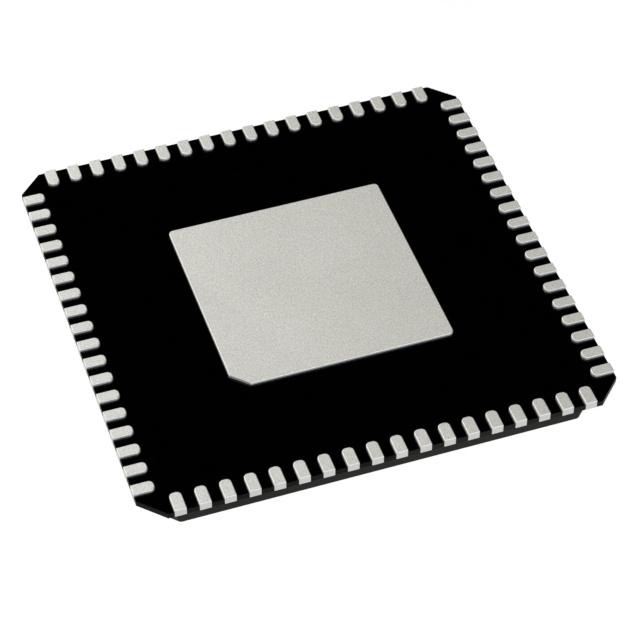
The SI53019-A01AGMR is a zero-delay buffer clock distribution component manufactured by Skyworks Solutions Inc. It features a single differential input and nineteen differential HCSL outputs, packaged in a 72-VFQFN (10x10 mm) exposed pad surface-mount device. The device operates on a supply voltage ranging from 3.135 V to 3.465 V with a maximum operating frequency of 133.33 MHz. It includes an integrated Phase-Locked Loop (PLL) for jitter attenuation and supports an industrial temperature range from -40°C to +85°C.
Verify the specific suffix 'R' indicates reel packaging configuration distinct from tray variants. Confirm RoHS compliance status via the official datasheet as manufacturing processes may evolve. Check for End-of-Life notices or Product Change Notifications that could affect long-term availability. Ensure the 72-QFN footprint matches the target PCB layout constraints precisely.
Select this component when a single source clock must drive multiple PCIe or QPI endpoints with minimal skew. The internal PLL is suitable for environments requiring jitter cleaning rather than simple passive buffering. Verify that the HCSL output voltage levels are compatible with the receiving logic inputs across the specified temperature range.
This part belongs to the Si53019 family of zero-delay buffers optimized for Intel architecture interfaces. It serves as a critical timing element in complex digital systems where clock synchronization between processors and peripherals is mandatory. The device replaces discrete buffer solutions to reduce board space and improve signal reliability.
Public confirmed substitute part numbers are not available in the provided documentation. Consult Skyworks Solutions for current portfolio alternatives if this discontinued item is required for new designs.
The maximum operating frequency is 133.33 MHz.
Yes, the SI53019-A01AGMR integrates a Phase-Locked Loop for jitter attenuation and clock synthesis.
It provides nineteen differential HCSL (High-Speed Current-Mode Logic) outputs.
 SI53019-A01AGMR
The activity of extra discounts on wholesale prices is in full swing…
Please fill in your contact information and we will send you the latest wholesale price list.