 ChipApex | Global Electronic Components Supplier
SEARCH
Search Product
Search Post
— IC芯片 | 连接器 | 传感器 | 被动器件 —
Search productSearch post
— IC芯片 | 连接器 | 传感器 | 被动器件 —
Consult the customer manager about the wholesale price.
consultation hotline:86-132-6715-2157
email:[email protected]
Contact the product manager for consultation. One-stop consultation is available.
Do you want a lower wholesale price? Please send us your inquiry and we will reply immediately.
The SI8452AA-A-IS1 is a five-channel digital isolator from Skyworks Solutions, utilizing capacitive coupling technology for signal transmission. It operates within a supply voltage range of 2.7 V to 5.5 V and supports data rates up to 150 Mb/s. The device provides an insulation voltage of 1000 Vrms and features unidirectional polarity with three forward and two reverse channels. Key electrical parameters include a propagation delay of 6 ns, a rise time of 5 ns, and a fall time of 3.7 ns. It functions reliably across an operating temperature range of -40°C to +125°C and is housed in a 16-lead SOIC-Narrow package.
Verify the specific suffix configuration against official Skyworks documentation to ensure correct packaging and variant selection. Confirm that the component meets all required safety certifications for your target application region. Check for end-of-life status or recommended replacement parts if sourcing for long-term production. Ensure compatibility with your PCB footprint specifications before finalizing procurement orders.
Select this component when designing circuits requiring high-speed data transfer alongside significant voltage isolation barriers. The unidirectional channel configuration suits applications where signal flow is strictly one-way. Consider the thermal performance and power dissipation limits when integrating into dense board layouts. Validate that the input logic levels match your source devices for reliable operation across the specified temperature range.
This part belongs to the SI845x family of CMOS digital isolators, which are designed to replace traditional optocouplers in modern electronic designs. The series offers improved speed, lower power consumption, and greater reliability compared to legacy technologies. Skyworks utilizes proprietary silicon-on-insulator processes to achieve high isolation ratings and consistent performance characteristics across the product line.
Consult official Skyworks documentation for confirmed substitute part numbers. Verify functional equivalence regarding channel count, isolation voltage, and data rate before implementing any alternative components in existing designs.
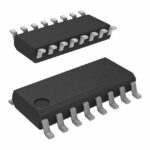 SI8452AA-A-IS1
The activity of extra discounts on wholesale prices is in full swing…
Please fill in your contact information and we will send you the latest wholesale price list.





