ChipApex | Global Electronic Components Supplier
SEARCH
Search Product
Search Post
— IC芯片 | 连接器 | 传感器 | 被动器件 —
Search productSearch post
— IC芯片 | 连接器 | 传感器 | 被动器件 —
Consult the customer manager about the wholesale price.
consultation hotline:86-132-6715-2157
email:[email protected]
Contact the product manager for consultation. One-stop consultation is available.
Do you want a lower wholesale price? Please send us your inquiry and we will reply immediately.
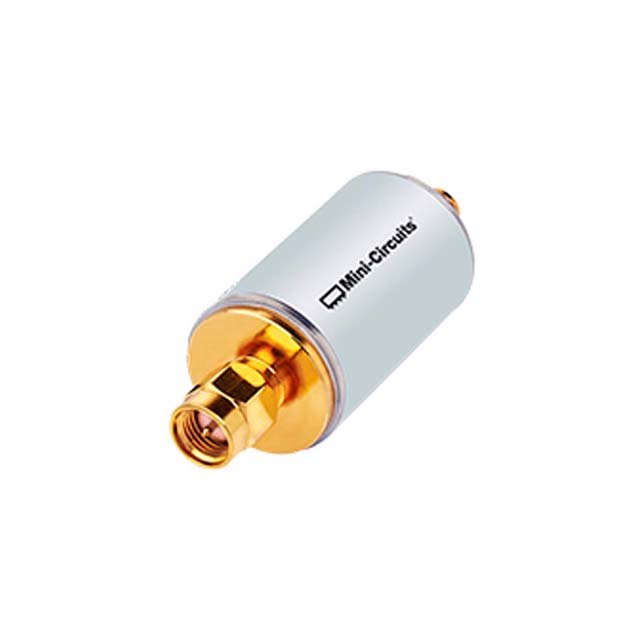
The SIF-50+ is a lumped LC bandpass filter designed for radio frequency applications, manufactured by Mini-Circuits. It features a center frequency of 50 MHz with a bandwidth of 17 MHz. The component operates at a characteristic impedance of 50 Ohms and utilizes SMA connectors for termination. It is housed in an FF99 case style, measuring 0.700 inches in diameter and 1.980 inches in length (17.78mm x 50.29mm). The filter exhibits a typical insertion loss of 0.15 dB. It supports a working temperature range from -55°C to +100°C and complies with RoHS3 standards.
Verify the exact part number against official Mini-Circuits documentation to ensure compatibility with system requirements. Confirm that the SMA termination style matches the existing circuit board layout or cable assemblies. Check environmental ratings if operation exceeds standard industrial temperature ranges. Ensure that the physical dimensions fit within the designated enclosure space without mechanical interference.
Select this component when a precise 50 MHz center frequency with a 17 MHz bandwidth is required. The 50 Ohm impedance rating must align with the surrounding RF chain components to maintain signal integrity. Consider the FF99 package size constraints during the mechanical design phase. Evaluate the insertion loss specification against system sensitivity requirements to ensure adequate signal strength after filtering.
The SIF-50+ belongs to Mini-Circuits' series of lumped LC bandpass filters. These components are engineered for high performance in RF and microwave frequencies. The product line offers various center frequencies and bandwidth options to suit different application needs. The '+' suffix typically indicates compliance with specific environmental regulations such as RoHS.
Direct substitutes include other Mini-Circuits models with similar specifications, such as the SIF-40+ or SIF-21.4+, though these have different center frequencies. Verify electrical parameters carefully before substitution. No cross-model generic features should be assumed; each part has unique characteristics.
 SIF-50+
The activity of extra discounts on wholesale prices is in full swing…
Please fill in your contact information and we will send you the latest wholesale price list.