 ChipApex | Global Electronic Components Supplier
SEARCH
Search Product
Search Post
— IC芯片 | 连接器 | 传感器 | 被动器件 —
Search productSearch post
— IC芯片 | 连接器 | 传感器 | 被动器件 —
Consult the customer manager about the wholesale price.
consultation hotline:86-132-6715-2157
email:[email protected]
Contact the product manager for consultation. One-stop consultation is available.
Do you want a lower wholesale price? Please send us your inquiry and we will reply immediately.
The SiTime SIT3821AI-2D2-XXXX000.FP0000X is an unprogrammed blank MEMS VCXO oscillator from the SiT3821 series. It utilizes a base resonator requiring user programming to define specific timing parameters. The device supports a frequency range of 1 MHz to 220 MHz and operates on supply voltages of 2.5 V or 3.3 V. It features LVDS output signaling and is housed in a compact SMD7050-6P surface-mount package. The component is designed for industrial applications with an operating temperature range spanning from -40°C to +85°C.
Verify that the specific suffix matches the required programming configuration, as this part is an unprogrammed blank. Confirm the LVDS output type and voltage compatibility with the target system design. Ensure the SMD7050-6P footprint aligns with the PCB layout constraints. Check regional availability and lead times through authorized distributors, as inventory levels may vary significantly for custom-programmable components.
Select this component when a customizable VCXO with LVDS outputs is required within the 1 MHz to 220 MHz range. The 2.5 V and 3.3 V supply options provide flexibility for various logic families. Consider the SMD7050-6P package size for space-constrained designs. Ensure the application benefits from MEMS robustness over quartz, particularly in environments subject to mechanical stress or vibration where standard oscillators might fail.
This model belongs to the SiT3821 family of programmable VCXOs manufactured by SiTime. These devices are designed to replace fixed-frequency crystals and oscillators with flexible, software-configurable alternatives. The series emphasizes high performance and miniaturization, leveraging silicon MEMS technology to deliver superior stability and durability in compact form factors suitable for modern electronic assemblies.
Direct replacements include other SiTime programmable VCXOs such as the SIT3822AI series for higher frequencies up to 625 MHz. Cross-model substitutes like the SIT3809AI offer similar functionality in different packages. Verify that any substitute maintains the required LVDS output format and supply voltage specifications to ensure circuit compatibility without redesign.
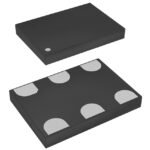 SIT3821AI-2D2-XXXX000.FP0000X
The activity of extra discounts on wholesale prices is in full swing…
Please fill in your contact information and we will send you the latest wholesale price list.





