 ChipApex | Global Electronic Components Supplier
SEARCH
Search Product
Search Post
— IC芯片 | 连接器 | 传感器 | 被动器件 —
Search productSearch post
— IC芯片 | 连接器 | 传感器 | 被动器件 —
Consult the customer manager about the wholesale price.
consultation hotline:86-132-6715-2157
email:[email protected]
Contact the product manager for consultation. One-stop consultation is available.
Do you want a lower wholesale price? Please send us your inquiry and we will reply immediately.
The SiT92112AI-N is a high-performance LVCMOS clock buffer featuring an additive phase jitter of 50 fs RMS. It operates on a 1.8 V to 3.3 V supply with a maximum frequency (FMAX) of 200 MHz. The device provides four single-ended outputs from one input, utilizing synchronous glitch-free output enable (OE) for synchronization. It includes integrated serial termination for 50 Ω channels and supports 3.3V tolerant inputs. Packaged in an 8-pin, 2 × 2 mm DFN, it ensures very low pin-to-pin skew under 50 ps.
Verify the specific ordering suffix 'AI' against the manufacturer's official documentation to confirm industrial temperature range (-40°C to +105°C) and silicon revision level. Ensure compatibility with standard land patterns as defined in IPC-7351B guidelines for the 8-DFN package before finalizing procurement specifications.
Select this component when designing systems requiring low jitter distribution for frequencies up to 200 MHz. The integrated 50 Ω termination simplifies PCB layout by eliminating external resistors. Confirm that the application voltage falls within the 1.71 V to 3.465 V operating range and that the thermal characteristics (ΘJA 75 °C/W) suit the enclosure environment.
The SiT92112 belongs to SiTime's family of high-performance LVCMOS clock buffers designed for jitter-sensitive applications. This specific model focuses on providing synchronized, glitch-free clock distribution with minimal added noise, making it suitable for modern digital infrastructure where signal integrity is critical.
Public confirmed substitute part numbers are not available in the provided datasheet or source material.
It features a synchronous glitch-free output enable (OE) function via the 1G pin, which eliminates intermediate incorrect output clock cycles during enable or disable transitions.
The device supports a maximum input frequency of 200 MHz for both DC-coupled and AC-coupled modes.
No, it includes integrated serial termination designed for a 50 Ω channel, reducing the need for external components.
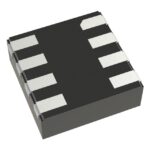 SIT92112AI-N
The activity of extra discounts on wholesale prices is in full swing…
Please fill in your contact information and we will send you the latest wholesale price list.





