 ChipApex | Global Electronic Components Supplier
SEARCH
Search Product
Search Post
— IC芯片 | 连接器 | 传感器 | 被动器件 —
Search productSearch post
— IC芯片 | 连接器 | 传感器 | 被动器件 —
Consult the customer manager about the wholesale price.
consultation hotline:86-132-6715-2157
email:[email protected]
Contact the product manager for consultation. One-stop consultation is available.
Do you want a lower wholesale price? Please send us your inquiry and we will reply immediately.
The SMJ4416-15JDL is a military-grade static random-access memory (SRAM) device manufactured by Texas Instruments. It features a capacity of 16K x 4 bits, organized as 16,384 words with a 4-bit width. The component utilizes a page mode access architecture and operates within a supply voltage range of 4.5V to 5.5V. It is housed in an 18-pin ceramic dual in-line package (CDIP) designed for side-brazed mounting. The device supports asynchronous operation and requires RAS-only refresh cycles. It is qualified for extended temperature ranges suitable for harsh environments.
Verify the specific suffix JDL against official Texas Instruments documentation to confirm pinout and electrical specifications. Ensure compliance with export control regulations such as ITAR or EAR, as this is a defense-related semiconductor. Request full traceability documentation and lot history from authorized distributors. Confirm that the supplier provides genuine parts with no signs of refurbishment or repackaging.
Select this component when radiation tolerance and high reliability are required in space or military applications. The 16Kx4 configuration suits simple data storage needs where low power and fast access are prioritized. Consider the CDIP package constraints for PCB layout and thermal management. Verify that the system voltage aligns with the 5V nominal requirement and that refresh circuitry supports RAS-only operations.
The SMJ4416 series belongs to Texas Instruments' family of radiation-hardened static RAMs designed for extreme environments. These devices are engineered to withstand ionizing radiation and single-event effects common in orbital missions. The 16Kx4 density provides a compact solution for command and data storage in satellite subsystems. The ceramic packaging ensures hermetic sealing against moisture and contaminants.
Publicly confirmed substitute part numbers for the SMJ4416-15JDL were not identified in available documentation. Cross-referencing with other radiation-hardened SRAMs requires careful evaluation of pin compatibility and timing parameters.
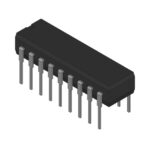 SMJ4416-15JDL
The activity of extra discounts on wholesale prices is in full swing…
Please fill in your contact information and we will send you the latest wholesale price list.





