 ChipApex | Global Electronic Components Supplier
SEARCH
Search Product
Search Post
— IC芯片 | 连接器 | 传感器 | 被动器件 —
Search productSearch post
— IC芯片 | 连接器 | 传感器 | 被动器件 —
Consult the customer manager about the wholesale price.
consultation hotline:86-132-6715-2157
email:[email protected]
Contact the product manager for consultation. One-stop consultation is available.
Do you want a lower wholesale price? Please send us your inquiry and we will reply immediately.
The SN54LS14J is a hex Schmitt-trigger inverter manufactured by Texas Instruments. It contains six independent inverters within a 14-pin ceramic dual in-line package (CDIP). The device operates from very slow edges and provides improved line-receiving characteristics with high noise immunity. It functions as an inverter with distinct positive-going (VT+) and negative-going (VT–) input threshold levels, ensuring clean, jitter-free output signals even from slow input ramps. The component is temperature compensated and designed for military-grade reliability.
Verify that the ordering suffix 'J' corresponds to the CDIP package variant when sourcing replacements. Confirm the specific revision level of the datasheet matches the production batch requirements. Ensure the procurement channel sources components directly from authorized distributors to maintain traceability and authenticity standards required for this logic family.
Select this component when system designs require robust signal conditioning for slow-rising waveforms or noisy digital inputs. The SN54LS14J is appropriate for applications needing guaranteed hysteresis to eliminate output chatter. Consider the CDIP package constraints regarding board space and thermal dissipation compared to surface-mount alternatives.
This part belongs to the SNx4LS14 series of hex Schmitt-trigger inverters. It shares functional similarities with the SN5414 but utilizes Low-power Schottky technology for reduced power consumption. The device is part of a broader family including commercial variants like the SN74LS14, distinguished by extended temperature ranges and packaging options suitable for industrial and military specifications.
SNJ54LS14J
The Schmitt-trigger design creates different voltage thresholds for positive-going and negative-going transitions. This hysteresis prevents multiple output transitions caused by noise or slow edge rates, resulting in clean, jitter-free output signals.
The device functions as a hex inverter, performing the Boolean function Y = A in positive logic. Each of the six internal circuits independently inverts its respective input signal.
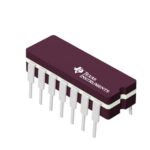 SN54LS14J
The activity of extra discounts on wholesale prices is in full swing…
Please fill in your contact information and we will send you the latest wholesale price list.





