 ChipApex | Global Electronic Components Supplier
SEARCH
Search Product
Search Post
— IC芯片 | 连接器 | 传感器 | 被动器件 —
Search productSearch post
— IC芯片 | 连接器 | 传感器 | 被动器件 —
Consult the customer manager about the wholesale price.
consultation hotline:86-132-6715-2157
email:[email protected]
Contact the product manager for consultation. One-stop consultation is available.
Do you want a lower wholesale price? Please send us your inquiry and we will reply immediately.
The SN65LV1224BDBR is a low-voltage differential signaling (LVDS) deserializer manufactured by Texas Instruments. It converts serial LVDS data streams into parallel LVTTL outputs, supporting data rates from 100 Mbps to 660 Mbps. The device operates on a single 3V to 3.6V power supply and features integrated ESD protection. It utilizes a 28-pin SSOP surface-mount package with dimensions of 10.2mm length and 1.95mm height. The component supports an operating temperature range from -40°C to 85°C and complies with RoHS standards.
Verify the specific ordering suffix to confirm the tape and reel packaging format required for automated assembly processes. Ensure the voltage supply matches the 3V to 3.6V operational range specified in the datasheet. Confirm that the thermal environment remains within the -40°C to 85°C industrial temperature limits during operation. Check for any recent product change notices regarding manufacturing site updates or material substitutions.
Select this component when a single-channel LVDS input must be expanded into ten parallel LVTTL outputs. It is suitable for applications requiring data rates up to 660 Mbps with low skew characteristics. Consider the 28-SSOP package constraints for PCB layout space. Verify compatibility with the corresponding serializer, such as the SN65LV1023A, for complete SerDes link functionality.
This part belongs to the SN65LV1224B family of LVDS interface devices designed for high-speed data transmission. It serves as the receiver counterpart to serializers like the SN65LV1023A, forming a complete 10-bit SerDes solution. The device is engineered to replace older generations of LVDS components while maintaining pin compatibility and functional equivalence for system upgrades.
The SN65LV1224BDB is the tube-packaged equivalent of this reel-based component. Both parts share identical electrical specifications and pinouts. Verify that the packaging difference does not impact the automated pick-and-place requirements of the manufacturing line.
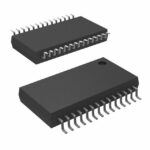 SN65LV1224BDBR
The activity of extra discounts on wholesale prices is in full swing…
Please fill in your contact information and we will send you the latest wholesale price list.





