 ChipApex | Global Electronic Components Supplier
SEARCH
Search Product
Search Post
— IC芯片 | 连接器 | 传感器 | 被动器件 —
Search productSearch post
— IC芯片 | 连接器 | 传感器 | 被动器件 —
Consult the customer manager about the wholesale price.
consultation hotline:86-132-6715-2157
email:[email protected]
Contact the product manager for consultation. One-stop consultation is available.
Do you want a lower wholesale price? Please send us your inquiry and we will reply immediately.
The SN65LVDS151DAG4 is a MuxIt Serializer-Transmitter manufactured by Texas Instruments, designed for high-speed data transmission applications. It operates within an extended temperature range of -40°C to +85°C and utilizes a 32-pin Thin Shrink Small Outline Package (TSSOP). The device supports the EIA-644-A and TIA-644-A interface standards, ensuring compatibility with LVDS protocols. Key electrical characteristics include differential output capability and standard input features. The component is lead-free and RoHS compliant, adhering to environmental safety regulations. With a single driver configuration and 32 terminals, it provides a compact solution for serializing data streams in industrial and commercial electronic systems requiring reliable low-voltage differential signaling.
Verify the specific package variant matches the 32-pin TSSOP requirement. Confirm RoHS compliance status and lead-free certification for regulatory adherence. Ensure the operating temperature range aligns with the intended environment. Check for any specific ordering suffixes that may affect packaging or testing criteria. Validate the interface standard compatibility with existing system components before integration.
Select this component when a serialized transmitter function is required within the LVDS ecosystem. The 32-pin TSSOP package offers a balance between pin count and board space efficiency. Consider the -40°C to +85°C rating for environments exceeding standard commercial limits. Verify that the EIA-644-A standard meets the system's signaling requirements. Evaluate the single-driver architecture against the total channel needs of the design.
This part belongs to the SN65LVDS series from Texas Instruments, which focuses on low-voltage differential signaling solutions. The 'MuxIt' designation indicates its role in data serialization, distinct from simple line drivers or receivers. It complements other devices in the family that handle parallel-to-serial conversion or deserialization tasks.
Check for direct cross-references within the SN65LVDS family. Verify if alternative packages like SOIC are available for the same functional core. Ensure any substitute maintains the 32-pin footprint or requires PCB redesign.
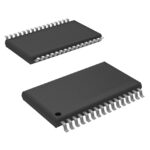 SN65LVDS151DAG4
The activity of extra discounts on wholesale prices is in full swing…
Please fill in your contact information and we will send you the latest wholesale price list.






