 ChipApex | Global Electronic Components Supplier
SEARCH
Search Product
Search Post
— IC芯片 | 连接器 | 传感器 | 被动器件 —
Search productSearch post
— IC芯片 | 连接器 | 传感器 | 被动器件 —
Consult the customer manager about the wholesale price.
consultation hotline:86-132-6715-2157
email:[email protected]
Contact the product manager for consultation. One-stop consultation is available.
Do you want a lower wholesale price? Please send us your inquiry and we will reply immediately.
The SN65LVDS20DRFTG4 is a low-voltage differential signaling (LVDS) transceiver manufactured by Texas Instruments. It integrates one LVDS driver and one LVDS receiver within a single package, supporting data rates up to 65 Mbps. The device operates on a single 3.3 V power supply with a maximum voltage of 3.6 V and functions across an industrial temperature range from -40°C to +85°C. Packaged in a compact 10-pin VSSOP format, it consumes approximately 17 mA of quiescent current. This component facilitates high-speed serial communication while minimizing electromagnetic interference through differential signal transmission.
Verify the exact part number suffix against official Texas Instruments documentation to ensure correct packaging and tape-and-reel specifications. Confirm that the operating environment remains within the specified -40°C to +85°C temperature range. Ensure power supply stability does not exceed the 3.6 V maximum rating. Check for any specific RoHS compliance requirements relevant to your region before finalizing procurement orders.
Select this component when a combined transmitter and receiver solution is required for space-constrained designs. It is suitable for applications needing moderate speed up to 65 Mbps with low power consumption. Consider the VSSOP-10 package size for PCB layout constraints. Verify compatibility with system voltage levels and signal integrity requirements before implementation.
This device belongs to the SN65LVDS series of interface integrated circuits from Texas Instruments. The series focuses on providing reliable low-voltage differential signaling solutions for various electronic systems. The SN65LVDS20 variant specifically offers a balanced combination of driving and receiving capabilities in a minimal footprint, distinguishing it from dedicated drivers or receivers in the same family.
Consult official Texas Instruments substitution guides for verified alternatives. Generic equivalents may not match the specific electrical characteristics or pinout configuration. Ensure any replacement maintains the same data rate, voltage, and package type requirements.
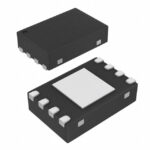 SN65LVDS20DRFTG4
The activity of extra discounts on wholesale prices is in full swing…
Please fill in your contact information and we will send you the latest wholesale price list.





