 ChipApex | Global Electronic Components Supplier
SEARCH
Search Product
Search Post
— IC芯片 | 连接器 | 传感器 | 被动器件 —
Search productSearch post
— IC芯片 | 连接器 | 传感器 | 被动器件 —
Consult the customer manager about the wholesale price.
consultation hotline:86-132-6715-2157
email:[email protected]
Contact the product manager for consultation. One-stop consultation is available.
Do you want a lower wholesale price? Please send us your inquiry and we will reply immediately.
The SN65LVDS302ZXHR is a programmable 27-bit serial-to-parallel receiver designed for FlatLink™3G compliant interfaces. It de-serializes data from one, two, or three SubLVDS differential lines into parallel CMOS outputs, supporting up to 24-bit RGB data and three control bits. The device operates with a supply voltage range of 1.65 V to 1.95 V and supports data throughput up to 1.755 Gbps. It features three power modes: active (17 mW at QVGA), standby (27 μW typical), and shutdown (0.7 μW typical). Packaged in an 80-pin nFBGA (5 mm × 5 mm) with a 0.5-mm ball pitch, it includes bus-swap functionality and meets SAE J1752/3 'Kh'-spec EMI requirements.
Verify the specific ordering suffix ZXHR corresponds to the nFBGA package variant when sourcing components. Confirm that the revision history aligns with the required documentation version, as packaging redesigns may have occurred. Ensure compatibility with the intended FlatLink transmitter, such as the SN65LVDS301, for stable PLL tracking across operating conditions.
Select this component for applications requiring a programmable serial-to-parallel receiver compatible with FlatLink technology. Consider the available operating modes to optimize power consumption based on whether the system requires active, standby, or shutdown states. Evaluate the pixel clock frequency requirements against the supported channel modes to ensure the device meets the necessary data throughput specifications.
This device belongs to the SN65LVDS series of high-speed differential line drivers and receivers manufactured by Texas Instruments. It is specifically engineered for display serial interconnects, functioning as the receiver counterpart to serializers like the SN65LVDS301. The part is designed to interface directly with LCD panels and mobile application processors.
The SN65LVDS302ZQER is listed as a discontinued alternative that has been replaced by the SN65LVDS302ZXHR. Designers should verify footprint equivalence between the MicroStar Jr. BGA and the newer nFBGA package before implementing substitutions.
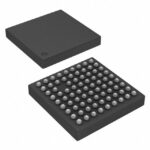 SN65LVDS302ZXHR
The activity of extra discounts on wholesale prices is in full swing…
Please fill in your contact information and we will send you the latest wholesale price list.






