 ChipApex | Global Electronic Components Supplier
SEARCH
Search Product
Search Post
— IC芯片 | 连接器 | 传感器 | 被动器件 —
Search productSearch post
— IC芯片 | 连接器 | 传感器 | 被动器件 —
Consult the customer manager about the wholesale price.
consultation hotline:86-132-6715-2157
email:[email protected]
Contact the product manager for consultation. One-stop consultation is available.
Do you want a lower wholesale price? Please send us your inquiry and we will reply immediately.
The SN65LVDS95DGG is a serializer integrated circuit manufactured by Texas Instruments, designed for high-speed data transmission applications. It accepts 21 parallel LVTTL inputs and converts them into three serial LVDS output streams. The device supports data rates up to 1.428 Gb/s per channel. It operates within a supply voltage range of 3 V to 3.6 V, with a typical operating voltage of 3.3 V. The component is housed in a 48-TSSOP package and is rated for an operating temperature range from -40°C to +85°C. Power dissipation is specified at 1.316 W.
Verify the specific suffix 'G' indicates lead-free packaging compliance when sourcing. Confirm the package type matches the 48-TSSOP footprint requirements for your PCB layout. Ensure the operating environment stays within the specified -40°C to +85°C temperature range. Check for moisture sensitivity level (MSL) handling requirements during assembly. Validate that the 3.3 V power supply meets the 3 V to 3.6 V operational limits.
Select this component when a serializer is needed to reduce trace count in high-speed digital designs. It is suitable for applications requiring conversion from parallel LVTTL to serial LVDS. Consider the 48-pin TSSOP package size for space-constrained boards. Verify that the 1.428 Gb/s maximum data rate meets the system bandwidth requirements. Ensure compatibility with downstream LVDS receivers in the signal chain.
This part belongs to the SN65LVDS95 series of serializers from Texas Instruments. It is part of the FlatLink family of interface solutions. The device is designed to simplify high-speed data transmission by reducing the number of required traces. It serves as a transmitter in serializing/deserializing links. The non-Q1 variant distinguishes it from automotive-qualified versions.
The SN65LVDS95DGGRQ1 is a parameter-equivalent alternative available in tape-and-reel packaging. The SN65LVDS95DGGREP is another variant offered in reel packaging. Verify pinout and electrical specifications match before substitution. Ensure the replacement part meets the same thermal and voltage requirements.
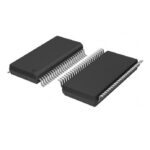 SN65LVDS95DGG
The activity of extra discounts on wholesale prices is in full swing…
Please fill in your contact information and we will send you the latest wholesale price list.





