 ChipApex | Global Electronic Components Supplier
SEARCH
Search Product
Search Post
— IC芯片 | 连接器 | 传感器 | 被动器件 —
Search productSearch post
— IC芯片 | 连接器 | 传感器 | 被动器件 —
Consult the customer manager about the wholesale price.
consultation hotline:86-132-6715-2157
email:[email protected]
Contact the product manager for consultation. One-stop consultation is available.
Do you want a lower wholesale price? Please send us your inquiry and we will reply immediately.
The SN65LVDS96DGGR is an LVDS interface integrated circuit manufactured by Texas Instruments, functioning as a serializer/deserializer receiver. It operates within a supply voltage range of 3 V to 3.6 V and supports data rates up to 1.36 Gb/s. The device accepts LVTTL input signals and converts them into low-voltage differential signaling (LVDS) outputs. It is housed in a TSSOP-48 package suitable for surface mount technology. The component is rated for operation between -40°C and +85°C and exhibits moisture sensitivity. Factory packaging quantity is specified as 2000 units per reel.
Verify the specific suffix against official documentation to confirm exact package type and tape-and-reel specifications. Confirm RoHS compliance status through the manufacturer's environmental files before integration. Ensure ESD handling protocols are followed due to moisture sensitivity classification. Cross-reference the datasheet revision date to validate parameter accuracy for current production batches.
Select this component when a deserializer function is required to convert LVDS signals to parallel LVTTL outputs. Verify that the system power supply remains within the 3 V to 3.6 V operating range. Ensure the PCB layout accommodates the TSSOP-48 footprint and thermal requirements. Confirm compatibility with the target data rate of 1.36 Gb/s for the specific application bandwidth needs.
This part belongs to the SN65LVDS9x series of LVDS interface ICs from Texas Instruments. It shares functional similarities with other serializers and deserializers in the family but is specifically configured as a receiver. The DGGR suffix indicates the TSSOP-48 package variant with reel packaging. It complements transmitter counterparts like the SN65LVDS95 for complete link solutions.
The SN65LVDS96DGG is a tube-packaged alternative within the same series. Verify pinout compatibility and electrical parameters before substitution. Check if the specific suffix variation affects package dimensions or thermal performance.
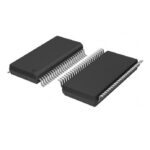 SN65LVDS96DGGR
The activity of extra discounts on wholesale prices is in full swing…
Please fill in your contact information and we will send you the latest wholesale price list.





