 ChipApex | Global Electronic Components Supplier
SEARCH
Search Product
Search Post
— IC芯片 | 连接器 | 传感器 | 被动器件 —
Search productSearch post
— IC芯片 | 连接器 | 传感器 | 被动器件 —
Consult the customer manager about the wholesale price.
consultation hotline:86-132-6715-2157
email:[email protected]
Contact the product manager for consultation. One-stop consultation is available.
Do you want a lower wholesale price? Please send us your inquiry and we will reply immediately.
The SN65LVP19DRFT is a high-frequency oscillator gain stage and buffer manufactured by Texas Instruments. It features a fully differential input and provides low-voltage PECL outputs in a 2-mm x 2-mm WSON-8 package. The device supports supply voltages of 2.375 V to 3.6 V, with typical operation at 2.5 V or 3.3 V. It achieves clock rates up to 1 GHz with a propagation delay of 460 ps (typical) and output transition times of 250 ps (LVPECL). Intrinsic phase jitter is typically 0.12 ps at 1 GHz. The part operates within a temperature range of -40°C to +85°C.
Verify the specific ordering suffix DRFT corresponds to the WSON-8 package and tape-and-reel quantity of 250 units. Confirm RoHS compliance and lead finish specifications match the design requirements. Ensure the component status is listed as active production data before finalizing procurement plans.
Select this component when a differential input is required alongside low-voltage PECL outputs. The SN65LVDS19 serves as the alternative if LVDS outputs are needed instead of PECL. Consider the 2.5-V or 3.3-V supply compatibility and the small form factor constraints of the application during selection.
This device belongs to the SN65LVx19 family, which includes the SN65LVDS19. While the SN65LVDS19 provides LVDS outputs, the SN65LVP19 variant specifically delivers low-voltage PECL outputs. Both share the same differential input architecture and physical package dimensions.
The SN65LVDS19DRFT is the direct functional equivalent within the same family, differing only in output type (LVDS vs. PECL). No other cross-model substitutes are documented in the provided datasheet.
The VBB pin provides a voltage reference, typically 1.35 V below VCC, which can be used to receive single-ended PECL input signals. If not utilized, it should be left unconnected.
Unlike the SN65LVx18 series, the SN65LVP19 does not have a Gain Control (GC) pin. The Q output defaults to a steady-state common-mode voltage of approximately 575 mV.
The datasheet specifies clock rates up to 1 GHz, with performance characteristics such as jitter measured at this frequency.
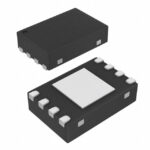 SN65LVP19DRFT
The activity of extra discounts on wholesale prices is in full swing…
Please fill in your contact information and we will send you the latest wholesale price list.





