 ChipApex | Global Electronic Components Supplier
SEARCH
Search Product
Search Post
— IC芯片 | 连接器 | 传感器 | 被动器件 —
Search productSearch post
— IC芯片 | 连接器 | 传感器 | 被动器件 —
Consult the customer manager about the wholesale price.
consultation hotline:86-132-6715-2157
email:[email protected]
Contact the product manager for consultation. One-stop consultation is available.
Do you want a lower wholesale price? Please send us your inquiry and we will reply immediately.
The SN65LVPE502RGET is a dual-channel USB 3.0 redriver and equalizer manufactured by Texas Instruments, designed to extend interconnect distances in high-speed serial links. It supports Super Speed (SS) data rates up to 5 Gb/s, complying with USB 3.0 specifications including electrical idle conditions and low-frequency periodic signals for power management. The device operates on a single 3.3 V supply voltage with a typical operating current of 120 mA. It is housed in a 24-pin VQFN package suitable for surface-mount installation. The component functions within an ambient temperature range of 0°C to +85°C and includes programmable equalization and de-emphasis capabilities to maintain signal integrity across PCB traces.
Verify the specific ordering suffix RGET to confirm the VQFN-24 package and tape-and-reel quantity. Confirm lifecycle status as NRND before finalizing design-in decisions, as this indicates the component is not recommended for new designs. Check moisture sensitivity level requirements and reflow soldering profiles during assembly planning to ensure reliability.
Select this component when dual-lane USB 3.0 signal integrity extension is required within a compact footprint. Ensure the design environment stays within the specified 0°C to +85°C operating temperature range. Verify that the available 3.3 V power rail meets the 120 mA current demand per device. Consider the NRND status if long-term production availability is a critical constraint for the target product lifecycle.
This part belongs to the SN65LVPE502 series of USB interface integrated circuits from Texas Instruments. It serves as a specialized signal conditioner distinct from general-purpose buffers, focusing specifically on the electrical requirements of USB 3.0 SuperSpeed interfaces. The device complements other USB interface solutions by addressing signal degradation issues inherent in high-frequency serial data transmission over copper traces.
Publicly confirmed substitute part numbers are not available in the provided documentation. Designers should consult Texas Instruments directly for current alternative recommendations or updated family members due to the NRND status.
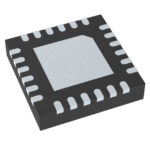 SN65LVPE502RGET
The activity of extra discounts on wholesale prices is in full swing…
Please fill in your contact information and we will send you the latest wholesale price list.





