 ChipApex | Global Electronic Components Supplier
SEARCH
Search Product
Search Post
— IC芯片 | 连接器 | 传感器 | 被动器件 —
Search productSearch post
— IC芯片 | 连接器 | 传感器 | 被动器件 —
Consult the customer manager about the wholesale price.
consultation hotline:86-132-6715-2157
email:[email protected]
Contact the product manager for consultation. One-stop consultation is available.
Do you want a lower wholesale price? Please send us your inquiry and we will reply immediately.
The SN65MLVD128DGG is an LVTTL to M-LVDS converter and repeater manufactured by Texas Instruments. It features one LVTTL receiver and eight line drivers, configured as an 8-port M-LVDS repeater. The device supports data rates up to 250 Mbps and clock frequencies up to 125 MHz. It operates on a single 3.3 V supply voltage and meets M-LVDS standards (TIA/EIA-899) for low-voltage differential lines with impedances between 30 Ω and 55 Ω. The component is housed in a TSSOP-64 package and functions within a temperature range of -40°C to +85°C.
Verify the specific ordering suffix to confirm the package type and tape-and-reel configuration, as variations exist within the SN65MLVD128 family. Ensure compatibility with the target system's voltage levels and interface requirements before integration. Cross-reference the manufacturer's latest datasheet for any updates on mechanical dimensions or electrical characteristics to guarantee accurate implementation in the design.
Select the SN65MLVD128DGG when an LVTTL input needs to be converted to multiple M-LVDS outputs for fan-out applications. This part is suitable for designs requiring up to eight differential outputs from a single single-ended source. Consider the SN65MLVD129 if dual independent inputs are required instead of a single input driving multiple outputs. Evaluate the skew specifications against the system's timing budget to ensure compliance with signal integrity requirements.
This component belongs to the SN65MLVD series of M-LVDS transceivers and converters designed for high-speed digital communication. It complements other devices like the SN65LVDS387 and SN65MLVD080 by offering specific LVTTL-to-M-LVDS translation capabilities. The DGG suffix indicates a TSSOP-64 surface-mount package, distinguishing it from through-hole or smaller footprint variants in the same product family.
The SN65MLVD129 serves as a functional alternative when dual-input capability is needed rather than single-input fan-out. Verify pinout compatibility and electrical parameters such as drive strength and skew before substituting. No direct pin-for-pin replacements with different functionality are confirmed in public documentation; consult the manufacturer for updated cross-reference lists.
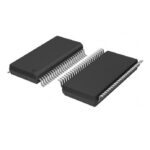 SN65MLVD128DGG
The activity of extra discounts on wholesale prices is in full swing…
Please fill in your contact information and we will send you the latest wholesale price list.





