 ChipApex | Global Electronic Components Supplier
SEARCH
Search Product
Search Post
— IC芯片 | 连接器 | 传感器 | 被动器件 —
Search productSearch post
— IC芯片 | 连接器 | 传感器 | 被动器件 —
Consult the customer manager about the wholesale price.
consultation hotline:86-132-6715-2157
email:[email protected]
Contact the product manager for consultation. One-stop consultation is available.
Do you want a lower wholesale price? Please send us your inquiry and we will reply immediately.
The SN74ACT573DWR is an octal D-type transparent latch with three-state outputs manufactured by Texas Instruments. It operates within a supply voltage range of 4.5V to 5.5V and features inputs that accept voltages up to 5.5V, ensuring TTL-voltage compatibility. The device provides high drive capability for low-impedance loads, with maximum propagation delays of 10.5ns at 5V. It is housed in a 20-pin SOIC package.
Verify the specific ordering suffix 'DWR' corresponds to the SOIC-20 tape-and-reel packaging configuration. Confirm RoHS compliance status and lead finish details via the latest Package Option Addendum. Ensure the moisture sensitivity level and peak reflow temperature ratings align with your assembly process requirements before finalizing procurement.
Select this component when designing systems requiring octal latching with bus-compatible three-state outputs. It is suitable for applications needing to drive heavy capacitive loads or interface with low-impedance buses. Verify that the operating temperature range of -40°C to 85°C meets your environmental specifications and that the 4.5V to 5.5V supply voltage matches your system power rails.
This part belongs to the SNx4ACT573 family of octal D-type transparent latches. While the SN54ACT573 variant serves military specifications, the SN74ACT573 series is designated for catalog commercial use. The 'DWR' suffix specifically identifies the SOIC package type with reel packaging, distinguishing it from tube-packed variants like the standard DW or other package options such as SSOP or TSSOP.
SN74ACT573DBR
The OE pin controls the output state but does not affect the internal operation of the latches. When OE is high, outputs enter a high-impedance state, allowing old data to be retained or new data to be entered without loading the bus lines.
When the LE input is taken low, the Q outputs are latched at the logic levels set up at the D inputs at that moment. The outputs maintain these latched values regardless of subsequent changes at the D inputs until LE goes high again.
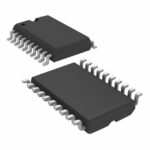 SN74ACT573DWR
The activity of extra discounts on wholesale prices is in full swing…
Please fill in your contact information and we will send you the latest wholesale price list.





