 ChipApex | Global Electronic Components Supplier
SEARCH
Search Product
Search Post
— IC芯片 | 连接器 | 传感器 | 被动器件 —
Search productSearch post
— IC芯片 | 连接器 | 传感器 | 被动器件 —
Consult the customer manager about the wholesale price.
consultation hotline:86-132-6715-2157
email:[email protected]
Contact the product manager for consultation. One-stop consultation is available.
Do you want a lower wholesale price? Please send us your inquiry and we will reply immediately.
The SN74AHC132RGYR is a quad Schmitt-trigger NAND gate from Texas Instruments' AHC logic family, housed in a VQFN-14 package. It operates within a supply voltage range of 2V to 5.5V and supports an operating temperature range of -40°C to +85°C. The device features low static power consumption and high noise immunity characteristic of CMOS technology. Propagation delay is typically 6ns at 5V. Outputs provide 8mA drive capability for both high and low states, ensuring robust signal integrity in digital logic applications requiring hysteresis.
Verify the specific suffix RGYR corresponds to the VQFN-14 package variant when sourcing. Confirm RoHS compliance status via the manufacturer's latest documentation. Ensure ESD handling protocols are followed due to CMOS sensitivity. Cross-reference the datasheet revision date to ensure alignment with current design specifications. Validate thermal performance requirements against the intended operating environment before final procurement.
Select this component when Schmitt-trigger action is required for NAND logic functions. The AHC series offers faster speeds than standard HC devices while maintaining 5V compatibility. Consider the VQFN-14 package for space-constrained PCB layouts. Verify that the 2V minimum supply voltage meets the lowest system rail requirement. Compare propagation delays against timing constraints if high-speed operation is critical.
This part belongs to the SN74AHC132 family of quad 2-input NAND gates with Schmitt triggers. The RGYR suffix denotes the specific VQFN-14 surface-mount package configuration. It is part of Texas Instruments' broader AHC logic portfolio designed for high-speed, low-power applications. The device serves as a direct replacement for older Schottky TTL equivalents in modern CMOS designs.
SN74AHC132DR (SOIC-14 package)
The Schmitt trigger inputs provide hysteresis, which filters out noise and ensures clean output transitions even with slowly changing input signals.
Yes, the device operates within a 2V to 5.5V range, making it compatible with both 3.3V and 5V logic systems.
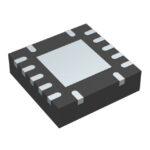 SN74AHC132RGYR
The activity of extra discounts on wholesale prices is in full swing…
Please fill in your contact information and we will send you the latest wholesale price list.





