 ChipApex | Global Electronic Components Supplier
SEARCH
Search Product
Search Post
— IC芯片 | 连接器 | 传感器 | 被动器件 —
Search productSearch post
— IC芯片 | 连接器 | 传感器 | 被动器件 —
Consult the customer manager about the wholesale price.
consultation hotline:86-132-6715-2157
email:[email protected]
Contact the product manager for consultation. One-stop consultation is available.
Do you want a lower wholesale price? Please send us your inquiry and we will reply immediately.
The SN74AHCT1G14DCKT is a single Schmitt-trigger inverter from the Texas Instruments AHCT logic family, housed in an SC-70-5 surface-mount package. It operates within a supply voltage range of 4.5 V to 5.5 V and supports a wide operating temperature range from -40°C to +85°C. The device features a maximum propagation delay of 12 ns at 5 V with a 50 pF load, ensuring fast signal inversion. Output drive capabilities include ±8 mA for both high and low states, while static current consumption remains low at a maximum of 20 µA.
Verify the specific suffix 'T' indicates tape-and-reel packaging when ordering. Confirm that system power supplies strictly adhere to the 4.5 V minimum requirement, as operation below this threshold may result in undefined logic levels or excessive current draw. Ensure ESD precautions are maintained during handling due to the small form factor.
Select this component when interfacing 5 V TTL logic with 5 V CMOS systems where noise immunity is critical. Unlike the AHC series, the AHCT variant accepts lower input voltages typical of TTL devices without external level shifting. Consider the SC-70-5 package size constraints and verify that the 8 mA output drive meets the capacitive load requirements of the downstream circuitry.
This part belongs to the SN74AHCT1Gxx series of single-function logic gates designed for 5 V applications. It complements other inverters and buffers in the same family, such as the non-inverting SN74AHCT1G17, allowing designers to build complex logic functions using standardized, low-power components across various industrial and consumer electronics platforms.
SN74AHCT1G14DCKR (Reel variant)
The Schmitt trigger converts slowly changing or noisy input signals into clean, sharp digital transitions by utilizing distinct positive and negative threshold voltages, thereby preventing multiple output toggles caused by signal noise.
The AHCT series is designed to accept TTL-compatible input voltage levels directly, whereas the AHC series typically requires higher input voltages closer to its own supply rail to register a valid logic high state.
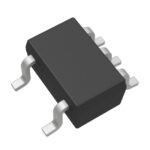 SN74AHCT1G14DCKT
The activity of extra discounts on wholesale prices is in full swing…
Please fill in your contact information and we will send you the latest wholesale price list.





