 ChipApex | Global Electronic Components Supplier
SEARCH
Search Product
Search Post
— IC芯片 | 连接器 | 传感器 | 被动器件 —
Search productSearch post
— IC芯片 | 连接器 | 传感器 | 被动器件 —
Consult the customer manager about the wholesale price.
consultation hotline:86-132-6715-2157
email:[email protected]
Contact the product manager for consultation. One-stop consultation is available.
Do you want a lower wholesale price? Please send us your inquiry and we will reply immediately.
The SN74ALS136N is a quadruple 2-input exclusive-OR gate featuring open-collector outputs, manufactured by Texas Instruments. It belongs to the Advanced Schottky (ALS) logic family and utilizes a 14-pin PDIP package for through-hole mounting. The device operates within a supply voltage range of 4.5 V to 5.5 V and supports a commercial temperature range from 0°C to +70°C. Key electrical characteristics include a propagation delay of 18 ns, a low-level output current capability of 8 mA, and a high-level output current of -400 µA.
Verify the specific ordering suffix to confirm the PDIP-14 through-hole package variant. Confirm RoHS compliance status as manufacturing processes may vary across production runs. Ensure the supplier provides valid traceability documentation for the ALS series component. Cross-reference the manufacturer part number against official Texas Instruments databases to authenticate the source before procurement.
Select this component when open-collector XOR functionality is required for bus sharing or voltage translation applications. The ALS series offers a balance between speed and power consumption compared to standard TTL alternatives. Consider the 14-pin DIP footprint constraints during PCB layout planning. Verify that the load capacitance connected to the open-collector outputs remains within the specified limits for reliable signal integrity.
This component is part of the SN74ALS136 series, which defines the functional logic type. The 'N' suffix specifically denotes the plastic dual-in-line package style. It serves as a direct functional replacement for other manufacturers' equivalents in the 74ALS136 category, maintaining pin compatibility and logical behavior within the Advanced Schottky specification framework.
Direct substitutes include the SN74LS136 for standard speed requirements or the SN74F136 for faster performance, provided open-collector outputs are acceptable. Verify pinout compatibility and electrical specifications such as output current ratings before substituting.
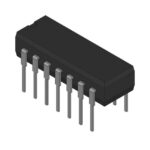 SN74ALS136N
The activity of extra discounts on wholesale prices is in full swing…
Please fill in your contact information and we will send you the latest wholesale price list.





