 ChipApex | Global Electronic Components Supplier

SEARCH
Search Product
Search Post
— IC芯片 | 连接器 | 传感器 | 被动器件 —
Search productSearch post
— IC芯片 | 连接器 | 传感器 | 被动器件 —
Consult the customer manager about the wholesale price.
consultation hotline:86-132-6715-2157
email:[email protected]
Contact the product manager for consultation. One-stop consultation is available.
Do you want a lower wholesale price? Please send us your inquiry and we will reply immediately.
SN74ALS166DE4 is listed in the Shift Registers range at ChipApex. The manufacturer field lists Texas Instruments. Its product description is IC SHIFT REG 8BIT PARALL 16-SOIC. Review the specifications below when checking this part for your BOM.
The SN74ALS166DE4 is a parallel-load 8-bit shift register from the Texas Instruments ALS logic family. It operates within a supply voltage range of 4.5 V to 5.5 V and supports clock frequencies up to 45 MHz. The device features buffered inputs, input clamping diodes, and an overriding clear function. It is characterized for operation between 0°C and 70°C.
Verify the specific ordering suffix 'E4' against current manufacturer documentation to confirm environmental compliance status and material specifications. Confirm package availability as standard variants may have different lifecycle statuses. Ensure the component meets the required operating temperature range for the intended application environment.
Select this component when designing with ALS logic families requiring buffered inputs and low drive requirements. Consider the asynchronous clear feature for system reset needs. Evaluate the maximum clock frequency limits against the system timing requirements to ensure reliable data shifting performance.
This part belongs to the SN74ALS166 series of parallel-load 8-bit shift registers manufactured by Texas Instruments. The 'D' suffix indicates a Small-Outline (SOIC) package, while 'E4' denotes lead-free and RoHS-compliant materials. It is designed for compatibility with most other TTL logic families.
Check for SN74ALS166DR or SN74ALS166DBR equivalents in tape-and-reel packaging if volume manufacturing is required. Verify that alternative packages maintain the same pinout and electrical characteristics for direct board replacement.
When SH/LD is high, the register accepts serial data at the SER input. When SH/LD is low, parallel data on inputs A through H is loaded synchronously on the next clock pulse.
The CLK INH input works with the CLK input through a positive-NOR gate. Holding either input high inhibits clocking, while holding either low enables the other input to function as the clock source.
Explore related parts through Logic, Integrated Circuits (ICs), all product categories, ChipApex homepage.
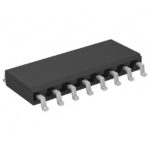 SN74ALS166DE4

The activity of extra discounts on wholesale prices is in full swing…
Please fill in your contact information and we will send you the latest wholesale price list.





