 ChipApex | Global Electronic Components Supplier
SEARCH
Search Product
Search Post
— IC芯片 | 连接器 | 传感器 | 被动器件 —
Search productSearch post
— IC芯片 | 连接器 | 传感器 | 被动器件 —
Consult the customer manager about the wholesale price.
consultation hotline:86-132-6715-2157
email:[email protected]
Contact the product manager for consultation. One-stop consultation is available.
Do you want a lower wholesale price? Please send us your inquiry and we will reply immediately.
The SN74ALS1804AN is a hex 2-input NAND gate integrated circuit manufactured by Texas Instruments. It belongs to the Advanced Low-power Schottky (ALS) logic family, providing high-speed performance with low power consumption. The device features six independent NAND gates within a single package. It operates within a supply voltage range of 4.5 V to 5.5 V and supports propagation delays typical for ALS technology. The component is designed for surface-mount or through-hole applications depending on the specific variant, though this model utilizes a standard plastic dual-in-line package suitable for general-purpose digital logic circuits.
Verify the exact package type and pinout compatibility with your PCB footprint before integration. Confirm that the supply voltage requirements align with your system's 5V rail specifications. Check for any specific handling instructions regarding electrostatic discharge during assembly. Ensure that the manufacturer's datasheet is consulted for detailed electrical characteristics and thermal management guidelines relevant to your operating environment.
Select this component when multiple independent NAND functions are required in a compact form factor. The ALS series offers a favorable balance between switching speed and power dissipation compared to standard TTL. Consider the physical package constraints and ensure that the board layout accommodates the specific lead pitch and dimensions defined in the mechanical drawings provided by the manufacturer.
This part is part of the broader SN74ALS series of logic ICs from Texas Instruments. The series is known for its improved performance over earlier LS TTL families while maintaining backward compatibility. The SN74ALS1804AN specifically addresses designs requiring multiple NAND gates without consuming excessive board space or power budget.
Compatible substitutes include other hex NAND gates from the same ALS family, such as the SN74ALS00N. Verify pin-to-pin compatibility and logical equivalence before substitution. Ensure that any alternative component meets the same voltage and temperature operating ranges.
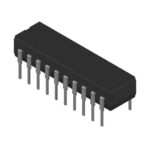 SN74ALS1804AN
The activity of extra discounts on wholesale prices is in full swing…
Please fill in your contact information and we will send you the latest wholesale price list.





