 ChipApex | Global Electronic Components Supplier
SEARCH
Search Product
Search Post
— IC芯片 | 连接器 | 传感器 | 被动器件 —
Search productSearch post
— IC芯片 | 连接器 | 传感器 | 被动器件 —
Consult the customer manager about the wholesale price.
consultation hotline:86-132-6715-2157
email:[email protected]
Contact the product manager for consultation. One-stop consultation is available.
Do you want a lower wholesale price? Please send us your inquiry and we will reply immediately.
The SN74ALS563BDWRG4 is an octal D-type transparent latch manufactured by Texas Instruments. It belongs to the SN54/74ALS logic family and features inverting outputs with three-state capability. The device operates within a supply voltage range of 4.5 V to 5.5 V and supports a propagation delay of 12 ns. It provides a low-level output current of 24 mA and a high-level output current of -12 mA, with a maximum static current of 8 uA. The component is housed in a 20-pin SOIC package and functions reliably across an operating temperature range from -40°C to +85°C.
Verify the complete part number SN74ALS563BDWRG4 against official Texas Instruments documentation to confirm the specific suffix designations. Ensure the procurement source provides valid RoHS compliance certificates matching the G4 designation. Cross-reference the datasheet revision history to guarantee the component meets current manufacturing standards and material specifications before finalizing acquisition.
Select this component when designing systems that require octal latching with inverting functionality and three-state bus isolation. The ALS series offers superior speed compared to standard LS logic while maintaining compatible power consumption profiles. Verify that the application environment stays within the specified -40°C to +85°C temperature range and that the 4.5V to 5.5V supply voltage aligns with the system power architecture.
This device is part of the broader SN54/74ALS logic family, which bridges the performance gap between standard TTL and advanced Schottky technologies. It shares functional similarities with other octal latches like the SN74LS573 but provides faster switching speeds. The component serves as a critical interface element in digital systems, facilitating data retention and bus management in complex integrated circuit designs.
Direct replacements include the SN74ALS563DW or SN74ALS563DR. Verify pinout compatibility and electrical characteristics against the original datasheet before substitution.
The device features inverting outputs, meaning the Q output is the logical complement of the D input when the latch is enabled.
Yes, the three-state output architecture allows the device to be connected directly to bus lines without external buffers.
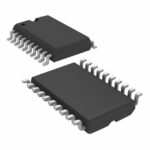 SN74ALS563BDWRG4
The activity of extra discounts on wholesale prices is in full swing…
Please fill in your contact information and we will send you the latest wholesale price list.





