 ChipApex | Global Electronic Components Supplier
SEARCH
Search Product
Search Post
— IC芯片 | 连接器 | 传感器 | 被动器件 —
Search productSearch post
— IC芯片 | 连接器 | 传感器 | 被动器件 —
Consult the customer manager about the wholesale price.
consultation hotline:86-132-6715-2157
email:[email protected]
Contact the product manager for consultation. One-stop consultation is available.
Do you want a lower wholesale price? Please send us your inquiry and we will reply immediately.
The SN74ALS573CNE4 is an octal D-type transparent latch from the Texas Instruments ALS logic family, housed in a 20-pin PDIP package. It features true logic outputs and operates within a supply voltage range of 4.5 V to 5.5 V. The device provides three-state outputs capable of driving bus lines directly with a low-level output current of up to 24 mA and a high-level output current of -2.6 mA at 4.5 V. Propagation delay from data input to output ranges from 2 ns to 14 ns, while the enable-to-output transition times vary between 1 ns and 28 ns depending on the signal path.
Verify that the ordering suffix 'E4' corresponds to the specified lead finish and RoHS compliance status listed in the manufacturer's packaging addendum. Confirm the PDIP-20 package type matches the required board layout dimensions. Ensure the commercial temperature range specification aligns with the operational environment requirements before finalizing procurement orders.
Select this component when designing systems requiring eight-bit data storage with direct bus interfacing capabilities. The ALS series offers a balance of speed and power consumption suitable for general-purpose logic applications. Consider the specific propagation delays and drive currents if interfacing with high-capacitance transmission lines or multiple downstream loads.
This part belongs to the SN74ALS573C family of octal latches manufactured by Texas Instruments. It is functionally compatible with other devices in the 54ALS/74ALS series but is distinguished by its specific commercial temperature rating and plastic dual in-line package format. The device serves as a standard solution for parallel data retention in legacy and industrial electronic designs.
SN74ALS573CN
The output-enable input places the outputs in a high-impedance state without affecting the internal operation of the latches, allowing data to be retained or entered while outputs are disabled.
When the latch-enable input is low, the outputs are latched to retain the data that was set up, isolating them from changes at the data inputs.
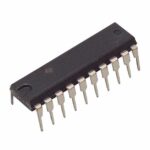 SN74ALS573CNE4
The activity of extra discounts on wholesale prices is in full swing…
Please fill in your contact information and we will send you the latest wholesale price list.






