 ChipApex | Global Electronic Components Supplier

SEARCH
Search Product
Search Post
— IC芯片 | 连接器 | 传感器 | 被动器件 —
Search productSearch post
— IC芯片 | 连接器 | 传感器 | 被动器件 —
Consult the customer manager about the wholesale price.
consultation hotline:86-132-6715-2157
email:[email protected]
Contact the product manager for consultation. One-stop consultation is available.
Do you want a lower wholesale price? Please send us your inquiry and we will reply immediately.
The SN74ALS857DWR is a hex 2-to-1 universal multiplexer manufactured by Texas Instruments, featuring three-state outputs for bus-oriented applications. It operates within a supply voltage range of 4.5 V to 5.5 V and is housed in a 24-pin SOIC package. The device supports high-speed data routing with propagation delays typically ranging from 10 ns to 20 ns depending on load conditions. Designed for low power consumption, it draws a maximum quiescent current of 19 mA at 5 V. The component functions as an identity comparator or data selector, enabling efficient signal management in digital logic systems.
Verify the complete part number including the 'DWR' suffix to ensure correct SOIC-24 packaging and reel quantity specifications. Confirm RoHS compliance status through official Texas Instruments documentation prior to integration. Cross-reference datasheet revision dates to validate electrical characteristics against current design requirements. Ensure ESD handling procedures are followed during storage and assembly processes.
Select this component when multiple independent 2-to-1 data paths with tri-state capability are required in a compact footprint. Consider the ALS series speed-power trade-offs compared to standard 74LS or advanced HC/HCT families. Evaluate board space constraints against the 24-pin SOIC package dimensions. Verify input voltage compatibility with existing logic levels in the target system architecture.
This multiplexer belongs to Texas Instruments' SN74ALS logic family, known for improved speed over standard LS devices with reduced power consumption. The SN74ALS857 provides versatile data routing capabilities essential for complex digital designs. Its three-state outputs facilitate direct connection to shared buses without external buffering components.
Direct substitutes include SN74ALS857N (PDIP package) or SN74ALS857NSR for alternative mounting styles. Check equivalent offerings from other manufacturers such as ON Semiconductor or NXP that match the ALS specification and pinout configuration.
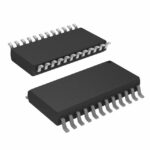 SN74ALS857DWR

The activity of extra discounts on wholesale prices is in full swing…
Please fill in your contact information and we will send you the latest wholesale price list.






