 ChipApex | Global Electronic Components Supplier
SEARCH
Search Product
Search Post
— IC芯片 | 连接器 | 传感器 | 被动器件 —
Search productSearch post
— IC芯片 | 连接器 | 传感器 | 被动器件 —
Consult the customer manager about the wholesale price.
consultation hotline:86-132-6715-2157
email:[email protected]
Contact the product manager for consultation. One-stop consultation is available.
Do you want a lower wholesale price? Please send us your inquiry and we will reply immediately.
The SN74ALVC32NSR is a quadruple 2-input positive-OR gate manufactured by Texas Instruments. It operates from a supply voltage range of 1.65 V to 3.6 V and features a maximum propagation delay of 2.8 ns at 3.3 V. The device provides ±24-mA output drive capability and includes latch-up performance exceeding 250 mA per JESD 17. ESD protection exceeds 2000-V human-body model, 200-V machine model, and 1000-V charged-device model standards. It is housed in a 14-pin SOP (NS) package and supports an operating free-air temperature range of -40°C to 85°C.
Verify the specific ordering suffix NSR corresponds to the tape-and-reel packaging format and SOP package type. Confirm that the component meets RoHS compliance requirements for your manufacturing process. Ensure the moisture sensitivity level rating aligns with your board assembly timeline and reflow soldering profiles. Check for any specific environmental or export control classifications relevant to your region.
Select this component when designing circuits that require quad OR gate functionality within a compact surface-mount footprint. Consider the ALVC series characteristics for applications demanding faster switching speeds compared to standard LVC devices. Evaluate the power dissipation capacitance and input transition rates against your system's timing constraints. Ensure the operating temperature range covers the environmental conditions of the final application.
This part belongs to the SN74ALVC32 family of quadruple 2-input positive-OR gates. It shares functional similarities with other variants like the SN74ALVC32DR and SN74ALVC32PWR, differing primarily in package style and shipping configuration. The ALVC series represents an advanced low-voltage CMOS technology designed for high-speed digital applications.
Direct substitutes include SN74ALVC32DR and SN74ALVC32DGVR, which offer identical electrical specifications but utilize SOIC or TVSOP packages respectively. Verify pin compatibility and thermal characteristics when transitioning between different package types within the same logical family.
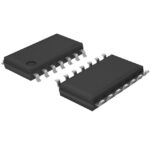 SN74ALVC32NSR
The activity of extra discounts on wholesale prices is in full swing…
Please fill in your contact information and we will send you the latest wholesale price list.





