 ChipApex | Global Electronic Components Supplier

SEARCH
Search Product
Search Post
— IC芯片 | 连接器 | 传感器 | 被动器件 —
Search productSearch post
— IC芯片 | 连接器 | 传感器 | 被动器件 —
Consult the customer manager about the wholesale price.
consultation hotline:86-132-6715-2157
email:[email protected]
Contact the product manager for consultation. One-stop consultation is available.
Do you want a lower wholesale price? Please send us your inquiry and we will reply immediately.
The SN74AS851BDW is a high-speed AS-series logic component manufactured by Texas Instruments. It functions as a 16-line to 1-line data selector or multiplexer with TTL-compatible inputs and three-state outputs. The device is housed in a PDSO28 package, suitable for surface-mount applications. It operates within a supply voltage range of 4.5 V to 5.5 V and supports an operating temperature range from 0°C to +70°C. This integrated circuit is designed for efficient data routing in digital systems requiring fast switching speeds.
Verify the exact package designation against official documentation, as distributor listings may vary between PDSO28 and SOIC-28 descriptions. Confirm the manufacturer source directly with Texas Instruments or authorized distributors to ensure authenticity. Check for end-of-life status or obsolescence notices before finalizing procurement plans. Ensure compatibility with existing board layouts regarding pin configurations and thermal requirements.
Select this component when a system requires selecting one signal out of sixteen available inputs with minimal propagation delay. The three-state output feature allows for direct connection to shared data buses without external buffering. Verify that the input voltage levels align with standard TTL logic thresholds. Consider the PDSO28 package dimensions for adequate PCB space allocation and thermal management during operation.
This part belongs to the Texas Instruments SN74AS series, which represents advanced Schottky logic family components known for improved speed over standard TTL. The SN74AS851B variant specifically addresses multiplexing needs in high-performance digital circuits. It serves as a critical interface element for managing multiple data sources in complex electronic architectures.
Check for SN74AS851N (PDIP) if through-hole mounting is required instead of surface mount. Verify functional equivalence with other 16-to-1 multiplexers from different manufacturers if sourcing constraints exist. Ensure pinout compatibility before substituting with alternative logic families.
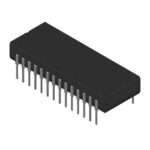 SN74AS851BDW

The activity of extra discounts on wholesale prices is in full swing…
Please fill in your contact information and we will send you the latest wholesale price list.






