 ChipApex | Global Electronic Components Supplier
SEARCH
Search Product
Search Post
— IC芯片 | 连接器 | 传感器 | 被动器件 —
Search productSearch post
— IC芯片 | 连接器 | 传感器 | 被动器件 —
Consult the customer manager about the wholesale price.
consultation hotline:86-132-6715-2157
email:[email protected]
Contact the product manager for consultation. One-stop consultation is available.
Do you want a lower wholesale price? Please send us your inquiry and we will reply immediately.
The SN74AUC14RGYR is a hex Schmitt-trigger inverter manufactured by Texas Instruments. It operates within a supply voltage range of 0.8 V to 2.7 V and features six independent inverters with Schmitt-trigger action for distinct positive-going (VT+) and negative-going (VT–) input thresholds. The device supports partial-power-down mode via Ioff circuitry, which disables outputs to prevent backflow current. It provides ±9 mA output drive at 2.3 V and exhibits a maximum propagation delay of 2.7 ns at 2.5 V with a 30 pF load. The component is housed in a 14-pin VQFN package.
Verify the specific ordering suffix against the Package Option Addendum to confirm the exact tape and reel specifications. Ensure compatibility with the required moisture sensitivity level and peak reflow temperature ratings for your assembly process. Confirm the RoHS status and lead finish details match your manufacturing requirements before finalizing procurement.
Select this component when designing circuits requiring precise logic inversion with built-in noise filtering capabilities. The integrated Schmitt triggers are suitable for slow-rise-time signals or noisy environments. Consider the low power consumption and sub-1-V operability for battery-powered or energy-efficient designs operating within the specified voltage range.
This part belongs to the SN74AUC14 family of hex Schmitt-trigger inverters from Texas Instruments. It is designed for high-speed digital applications requiring robust signal integrity. The RGY suffix indicates a 14-pin VQFN package configuration. The device is actively produced and available in tape and reel packaging for automated assembly processes.
Direct substitutes include other SN74AUC14 variants with different package options such as SN74AUC14DR or SN74AUC14DWR. Verify pinout compatibility and electrical characteristics when considering alternative packages within the same logic family.
The Ioff circuitry disables the outputs when the device is powered down, preventing damaging current backflow through the device during partial-power-down mode operations.
The Schmitt-trigger action provides different input threshold levels for positive-going and negative-going signals, improving noise immunity and ensuring clean switching transitions.
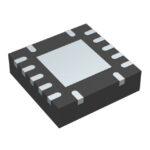 SN74AUC14RGYR
The activity of extra discounts on wholesale prices is in full swing…
Please fill in your contact information and we will send you the latest wholesale price list.





