 ChipApex | Global Electronic Components Supplier
SEARCH
Search Product
Search Post
— IC芯片 | 连接器 | 传感器 | 被动器件 —
Search productSearch post
— IC芯片 | 连接器 | 传感器 | 被动器件 —
Consult the customer manager about the wholesale price.
consultation hotline:86-132-6715-2157
email:[email protected]
Contact the product manager for consultation. One-stop consultation is available.
Do you want a lower wholesale price? Please send us your inquiry and we will reply immediately.
The SN74AUC1G02DBVR is a single 2-input positive-NOR gate from the Texas Instruments AUC logic series, housed in a SOT-23 (DBV) package. It operates within a supply voltage range of 0.8 V to 2.7 V, optimized for 1.65 V to 1.95 V applications. The device features low power consumption with a maximum static current of 10 µA and supports ±8 mA output drive at 1.8 V. Propagation delay is specified as 2.4 ns maximum at 1.8 V with a 30 pF load. It includes Ioff support for partial-power-down mode and robust ESD protection exceeding JESD 22 standards.
Verify the specific ordering suffix matches the required package type, as the DBV designation corresponds to the SOT-23 form factor. Confirm RoHS compliance status and lead finish details against the latest Package Option Addendum. Ensure the operating temperature range aligns with the -40°C to 85°C specification for industrial reliability. Cross-reference the part marking code U02R for production verification.
Select this component when a compact single-channel NOR gate is required for ultra-low voltage logic levels between 0.8 V and 2.7 V. The AUC series offers superior speed and power efficiency compared to standard CMOS families. Consider the SOT-23 package for space-constrained surface-mount layouts. Verify input transition rates do not exceed specifications to maintain timing integrity.
This device belongs to the SN74AUC1Gxx family of Little Logic devices designed by Texas Instruments. The AUC series utilizes advanced semiconductor processes to achieve high performance at very low supply voltages. The NanoFree technology allows for minimal footprint solutions, making it suitable for portable and battery-operated electronic systems requiring efficient power management.
Check for direct pin-compatible alternatives within the same AUC family if different logic functions are needed. Verify that any substitute maintains the 0.8 V to 2.7 V operating range and SOT-23 packaging constraints. Ensure electrical characteristics such as propagation delay and output drive current meet the original design requirements.
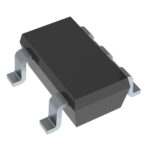 SN74AUC1G02DBVR
The activity of extra discounts on wholesale prices is in full swing…
Please fill in your contact information and we will send you the latest wholesale price list.





