 ChipApex | Global Electronic Components Supplier

SEARCH
Search Product
Search Post
— IC芯片 | 连接器 | 传感器 | 被动器件 —
Search productSearch post
— IC芯片 | 连接器 | 传感器 | 被动器件 —
Consult the customer manager about the wholesale price.
consultation hotline:86-132-6715-2157
email:[email protected]
Contact the product manager for consultation. One-stop consultation is available.
Do you want a lower wholesale price? Please send us your inquiry and we will reply immediately.
The SN74AUC1G19DCKR is a single-channel 1-of-2 decoder/demultiplexer from the Texas Instruments AUC series. It operates within a supply voltage range of 0.8 V to 2.7 V and is optimized for 1.65-V to 1.95-V applications. The device features an active-low enable input (E) that buffers data from input A to outputs Y0 (true) and Y1 (complement). It provides ±8-mA output drive at 1.8 V, with a maximum propagation delay of 3 ns at 1.8 V. Static current consumption is limited to 10 µA maximum.
Verify the specific package variant against the orderable addendum in the datasheet, as the SN74AUC1G19 family includes multiple packages like SOT-23 and DSBGA. Confirm that the SC70-6 package matches the required footprint. Ensure the design accounts for the recommended operating conditions regarding supply voltage and temperature ranges specified in the electrical characteristics tables.
Select this component when a compact 1-of-2 demultiplexer is required for sub-1-V or low-voltage logic systems. The device is specifically designed for 1.65-V to 1.95-V operation but remains functional across a broader 0.8-V to 2.7-V range. Consider the NanoFree™ packaging technology if minimizing board space is a priority, noting that the DCK package represents the SC70 form factor.
This device belongs to the Texas Instruments SN74AUC1Gxx series of Little Logic devices. These components are characterized by high speed and low power consumption, utilizing advanced semiconductor processes to achieve performance suitable for portable and battery-operated electronics. The AUC series supports mixed-voltage interfaces, making it suitable for bridging different logic domains in modern embedded systems.
SN74AUC1G19DBVR
The SN74AUC1G19DCKR includes Ioff circuitry that disables the outputs when the device is powered down. This prevents damaging current backflow through the device, allowing it to be fully specified for partial-power-down applications.
The Enable (E) input is active-low. When E is low, the device buffers the data on input A and passes it to the outputs Y0 (true) and Y1 (complement). When E is high, both outputs remain in a high state regardless of the input A state.
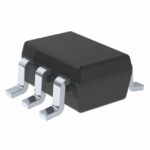 SN74AUC1G19DCKR

The activity of extra discounts on wholesale prices is in full swing…
Please fill in your contact information and we will send you the latest wholesale price list.





