 ChipApex | Global Electronic Components Supplier
SEARCH
Search Product
Search Post
— IC芯片 | 连接器 | 传感器 | 被动器件 —
Search productSearch post
— IC芯片 | 连接器 | 传感器 | 被动器件 —
Consult the customer manager about the wholesale price.
consultation hotline:86-132-6715-2157
email:[email protected]
Contact the product manager for consultation. One-stop consultation is available.
Do you want a lower wholesale price? Please send us your inquiry and we will reply immediately.
The SN74AUC1G32DCKR is a single 2-input positive-OR gate from the Texas Instruments AUC logic family, housed in a SC-70 (SOT-553) package. It operates within a supply voltage range of 0.8 V to 2.7 V, with specific optimization for 1.65 V to 1.95 V applications. The device features a maximum propagation delay of 2.4 ns at 1.8 V and supports 3.6-V I/O tolerance for mixed-mode signal operation. Key electrical characteristics include a maximum static current of 10 µA and an output drive capability of ±8 mA at 1.8 V.
Verify that the ordering suffix DCKR corresponds to the SC-70 package type and tape-and-reel packaging configuration. Confirm RoHS compliance status and moisture sensitivity level ratings prior to procurement. Ensure the supplier provides documentation matching the specific revision history of the datasheet to guarantee accurate switching characteristics and absolute maximum ratings are applied during design.
Select this component for designs requiring sub-1-V operation and mixed-mode signal interfacing due to its 3.6-V I/O tolerance. The SC-70 package offers a compact footprint suitable for space-constrained portable electronics. Consider the 2.4 ns maximum propagation delay for high-speed digital logic requirements within the specified temperature range of -40°C to +85°C.
This device belongs to the SN74AUC1G series of Little Logic devices, designed for ultra-low voltage applications. The AUC family utilizes advanced CMOS technology to achieve high speed while maintaining low power consumption. The SN74AUC1G32 specifically implements the Boolean OR function in positive logic, serving as a fundamental building block for digital signal processing and control circuits.
SN74AUC1G32DCKT is a compatible alternative in the same SC-70 package offering identical logical functionality and electrical specifications.
The Ioff circuitry disables the outputs when the device is powered down, preventing damaging current backflow through the device into the power supply rails of other active components.
The inputs are tolerant up to 3.6 V, allowing the device to interface with 3.6-V systems even when operating at lower supply voltages such as 1.8 V or 2.5 V.
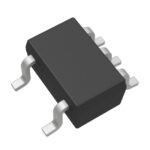 SN74AUC1G32DCKR
The activity of extra discounts on wholesale prices is in full swing…
Please fill in your contact information and we will send you the latest wholesale price list.





