ChipApex | Global Electronic Components Supplier
SEARCH
Search Product
Search Post
— IC芯片 | 连接器 | 传感器 | 被动器件 —
Search productSearch post
— IC芯片 | 连接器 | 传感器 | 被动器件 —
Consult the customer manager about the wholesale price.
consultation hotline:86-132-6715-2157
email:[email protected]
Contact the product manager for consultation. One-stop consultation is available.
Do you want a lower wholesale price? Please send us your inquiry and we will reply immediately.
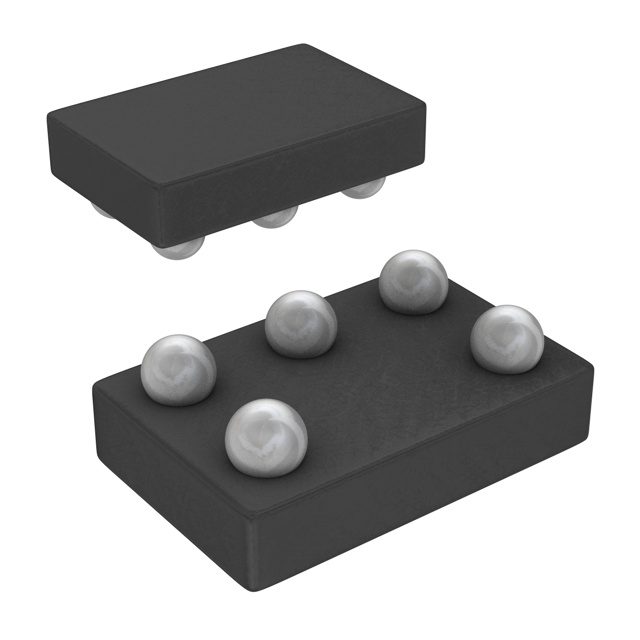
The SN74AUP1G00YEPR is a single 2-input positive-NAND gate from Texas Instruments' AUP series, designed for ultra-low power applications. It operates within a wide supply voltage range of 0.8 V to 3.6 V and features low static power consumption with ICC typically at 0.5 µA. The device supports live insertion and partial-power-down modes via Ioff circuitry. It exhibits input hysteresis of 250 mV typical at 3.3 V for improved noise immunity. Propagation delay is 4.8 ns maximum at 3.3 V with a 5 pF load. The component is housed in a DSBGA-5 package.
Verify the specific ordering suffix against the manufacturer's official documentation to confirm the exact package type and reel specifications. Ensure compatibility with the intended operating temperature range and supply voltage requirements before integration. Cross-reference the part number with the latest datasheet revision history to account for any changes in pinout or electrical characteristics.
Select this component for designs requiring minimal static and dynamic power consumption across a broad voltage spectrum. It is suitable for mixed-mode signal operations due to its 3.6-V I/O tolerance. Consider the device for portable applications where battery life is critical and small form factor constraints exist. Verify that the input transition rates align with the specified slew rate limits to maintain signal integrity.
This device belongs to the SN74AUP1Gxx family of single-gate logic ICs from Texas Instruments. The AUP series utilizes advanced CMOS technology optimized for ultra-low power performance. It serves as a fundamental building block for digital logic circuits, offering high noise immunity and robust ESD protection characteristics compared to older logic families.
Consult the official datasheet orderable addendum for direct pin-compatible alternatives within the same package. Verify functional equivalence regarding propagation delay and output drive strength when substituting with other NAND gates from the SN74AUP1G series.
 SN74AUP1G00YEPR
The activity of extra discounts on wholesale prices is in full swing…
Please fill in your contact information and we will send you the latest wholesale price list.