 ChipApex | Global Electronic Components Supplier
SEARCH
Search Product
Search Post
— IC芯片 | 连接器 | 传感器 | 被动器件 —
Search productSearch post
— IC芯片 | 连接器 | 传感器 | 被动器件 —
Consult the customer manager about the wholesale price.
consultation hotline:86-132-6715-2157
email:[email protected]
Contact the product manager for consultation. One-stop consultation is available.
Do you want a lower wholesale price? Please send us your inquiry and we will reply immediately.
The SN74AUP1G00YZPR is a single 2-input positive-NAND gate from the Texas Instruments AUP logic family, housed in a 5-pin DSBGA package. It operates within a supply voltage range of 0.8 V to 3.6 V and supports an operating temperature range of -40°C to +85°C. The device features low static power consumption with a maximum ICC of 0.9 µA and typical dynamic power dissipation capacitance of 4 pF at 3.3 V. Propagation delay (tpd) reaches a maximum of 4.8 ns at 3.3 V with a 5 pF load. Input hysteresis is typically 250 mV at 3.3 V, and the I/Os are tolerant up to 3.6 V.
Verify the specific YZPR suffix corresponds to the 5-pin DSBGA package configuration before procurement. Confirm that the design accommodates the specified thermal resistance values for the chosen PCB layout. Ensure input pins are tied to defined logic levels when unused to prevent floating states. Validate that the application environment remains within the -40°C to +85°C operating temperature limits.
Select this component for applications requiring minimal board space and ultra-low quiescent current. The wide 0.8 V to 3.6 V supply range makes it suitable for translating signals between different voltage domains. Consider the 3.6-V I/O tolerance if interfacing with slightly higher voltage peripherals. The small footprint is ideal for portable and battery-powered designs where size constraints are critical.
This part belongs to the SN74AUP1Gxx series of single-gate logic devices designed by Texas Instruments. The AUP family utilizes advanced CMOS technology to achieve significantly lower power consumption compared to standard logic families while maintaining high-speed performance. The YZPR designation specifically identifies the DSBGA-5 package variant within this product line.
The Ioff feature disables outputs when VCC is 0 V, preventing damaging current backflow through the device. This supports live insertion and partial-power-down modes.
Input hysteresis allows for slower input transition rates and provides better switching noise immunity at the input pins, ensuring stable logic state determination.
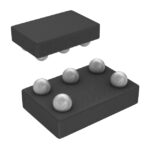 SN74AUP1G00YZPR
The activity of extra discounts on wholesale prices is in full swing…
Please fill in your contact information and we will send you the latest wholesale price list.





