 ChipApex | Global Electronic Components Supplier
SEARCH
Search Product
Search Post
— IC芯片 | 连接器 | 传感器 | 被动器件 —
Search productSearch post
— IC芯片 | 连接器 | 传感器 | 被动器件 —
Consult the customer manager about the wholesale price.
consultation hotline:86-132-6715-2157
email:[email protected]
Contact the product manager for consultation. One-stop consultation is available.
Do you want a lower wholesale price? Please send us your inquiry and we will reply immediately.
The SN74AUP1G08DRYR is a low-power single 2-input positive-AND gate from Texas Instruments, belonging to the SN74AUP1Gxx series. It operates within a supply voltage range of 0.8 V to 3.6 V and supports an operating temperature range of -40°C to +85°C. The device is housed in a compact 6-SON package with dimensions of 1.45 mm x 1 mm. It features a maximum propagation delay of 6.4 ns at 3.3 V with a 30 pF load and offers output drive currents of 4 mA for both high and low states.
Verify the complete part number including the DRYR suffix to confirm the specific 6-SON packaging and reel configuration. Ensure compatibility with the target PCB footprint, as the SON-6 outline differs from other small packages. Confirm RoHS compliance status if required by assembly specifications. Check for any recent product change notices regarding pinout or electrical characteristics before finalizing procurement.
Select this component when a single AND gate is needed in space-constrained designs. It is suitable for systems operating between 0.8 V and 3.6 V where low static power is critical. Compare against similar AUP series gates like the SN74AUP1G00 or SN74AUP1G32 if different logic functions are required. Consider the 6.4 ns delay for timing-critical paths and ensure the 4 mA drive current meets load requirements.
This device is part of the SN74AUP1Gxx family of ultra-low-power single-gate ICs. These components share common electrical characteristics and packaging options, allowing for design flexibility. The AUP series is designed to replace older logic families while offering lower power consumption and wider voltage ranges. It complements other single-gate solutions in Texas Instruments' portfolio for compact digital designs.
Direct substitutes include other SN74AUP1Gxx variants with identical pinouts and logic functions, such as the SN74AUP1G08DRLR. Cross-reference with SN74LVC1G08 for higher voltage tolerance if system requirements change. Verify that alternative packages maintain the same thermal and mechanical constraints.
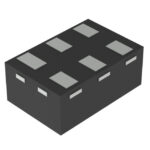 SN74AUP1G08DRYR
The activity of extra discounts on wholesale prices is in full swing…
Please fill in your contact information and we will send you the latest wholesale price list.





