 ChipApex | Global Electronic Components Supplier
SEARCH
Search Product
Search Post
— IC芯片 | 连接器 | 传感器 | 被动器件 —
Search productSearch post
— IC芯片 | 连接器 | 传感器 | 被动器件 —
Consult the customer manager about the wholesale price.
consultation hotline:86-132-6715-2157
email:[email protected]
Contact the product manager for consultation. One-stop consultation is available.
Do you want a lower wholesale price? Please send us your inquiry and we will reply immediately.
The SN74BCT373DBR is an octal transparent D-type latch with 3-state outputs manufactured by Texas Instruments. It utilizes state-of-the-art BiCMOS design to significantly reduce quiescent current while providing full parallel access for loading. The device operates within a supply voltage range of 4.5 V to 5.5 V and supports an operating temperature range of 0°C to 70°C. It features buffered output-enable inputs to drive bus lines or buffer memory address registers without interface components.
Verify the specific ordering suffix 'DBR' corresponds to the SSOP package and tape-and-reel carrier configuration. Confirm that the component meets RoHS compliance requirements for your assembly process. Ensure the operating environment remains within the specified 0°C to 70°C temperature range. Check for any applicable MIL-PRF-38535 testing requirements if used in critical applications, as standard production processing may not test all parameters.
Select this component when designing systems requiring octal data storage with tri-state bus interfacing capabilities. The BiCMOS technology offers lower power consumption compared to standard TTL alternatives. Consider the SSOP package dimensions for PCB layout constraints. Verify that the 3-state outputs can handle the capacitive loads of your specific bus architecture without additional buffering.
This part belongs to the SN54BCT373/SN74BCT373 family of octal transparent D-type latches. The 'SN74' designation indicates commercial grade operation, while the 'BCT' series signifies BiCMOS technology optimized for low power and high speed. The 'DBR' suffix specifically identifies the small-outline shrink package (SSOP) with tape-and-reel packaging for automated surface-mount assembly.
Direct pin-compatible substitutes include SN74BCT373DW (SOIC tube), SN74BCT373NSR (SOP tape-and-reel), and SN74BCT373N (PDIP tube). Cross-family replacements like SN74HC373 or SN74ACT373 require voltage level verification and timing analysis due to different electrical characteristics.
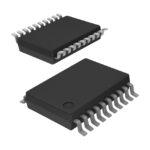 SN74BCT373DBR
The activity of extra discounts on wholesale prices is in full swing…
Please fill in your contact information and we will send you the latest wholesale price list.





