 ChipApex | Global Electronic Components Supplier

SEARCH
Search Product
Search Post
— IC芯片 | 连接器 | 传感器 | 被动器件 —
Search productSearch post
— IC芯片 | 连接器 | 传感器 | 被动器件 —
Consult the customer manager about the wholesale price.
consultation hotline:86-132-6715-2157
email:[email protected]
Contact the product manager for consultation. One-stop consultation is available.
Do you want a lower wholesale price? Please send us your inquiry and we will reply immediately.
SN74BCT8373ANT is listed in the Specialty Logic range at ChipApex. The manufacturer field lists Texas Instruments. Its product description is IC SCAN TEST DEVICE LATCH 24-DIP. Review the specifications below when checking this part for your BOM.
The SN74BCT8373ANT is an octal D-type latch scan test device from the Texas Instruments SCOPE family. It supports IEEE Standard 1149.1-1990 boundary-scan architecture via a 4-wire Test Access Port (TAP). The device operates within a supply voltage range of 4.5V to 5.5V and is characterized for commercial temperatures from 0°C to 70°C. It features an 8-bit instruction register, an 18-bit boundary-scan register, a 2-bit boundary-control register, and a bypass register.
Verify that the specific suffix 'NT' corresponds to the plastic 300-mil DIP package as documented in the datasheet. Confirm the component meets the commercial temperature range specifications of 0°C to 70°C. Ensure compatibility with the required 4.5V to 5.5V supply voltage levels for proper logic operation.
Select this component when boundary-scan testability is required for designs utilizing octal D-type latches. It serves as a direct functional replacement for standard BCT373 devices during normal operation while adding comprehensive test infrastructure. Consider the package constraints and operating temperature requirements before integration into the system design.
This device belongs to the Texas Instruments SCOPE family of testability products. It integrates standard latch functionality with advanced test structures compliant with IEEE 1149.1 standards. The inclusion of dedicated test terminals allows for non-intrusive testing of board assemblies without requiring physical test points.
The SN74BCT8373A is functionally equivalent to the SN74F373 and SN74BCT373 in normal mode. Verify package compatibility if substituting with other variants in the same logical family.
Explore related parts through Logic, Integrated Circuits (ICs), all product categories, ChipApex homepage.
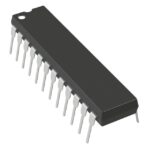 SN74BCT8373ANT

The activity of extra discounts on wholesale prices is in full swing…
Please fill in your contact information and we will send you the latest wholesale price list.





